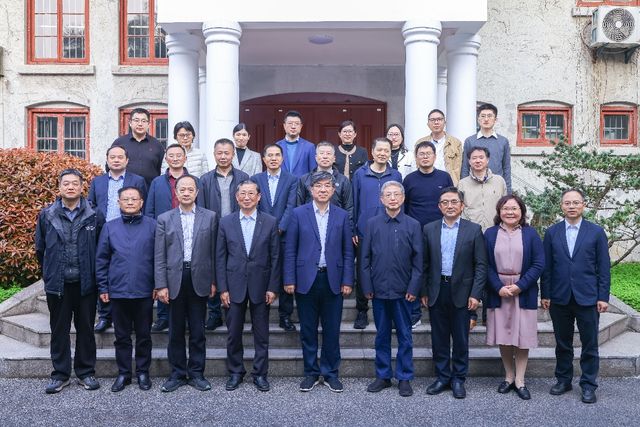
On April 1, 2026, the Symposium on Postgraduate Talent Cultivation in Engineering Management in the AI Era, hosted by the School of Management and Engineering, Nanjing University, was successfully held at the Gulou Campus of Nanjing University. Experts and scholars from more than ten renowned universities nationwide, including Tsinghua University, Shanghai Jiao Tong University, Tongji University, Wuhan University, Tianjin University, Dalian University of Technology, Northwestern Polytechnical University, and Hefei University of Technology, gathered to conduct in-depth discussions on the challenges and opportunities facing engineering management postgraduate education in the era of artificial intelligence. More than 20 members of the National MEM Steering Committee and university representatives attended the meeting, including Zheng Li, Chair of the National Master of Engineering Management (MEM) Steering Committee, Jiang Zhibin, Deputy Chair of the Industrial Engineering Steering Committee, Liu Xinbao, Vice Chairman of the Systems Engineering Society of China, and Zhang Wei, Secretary-General of the National MEM Steering Committee.
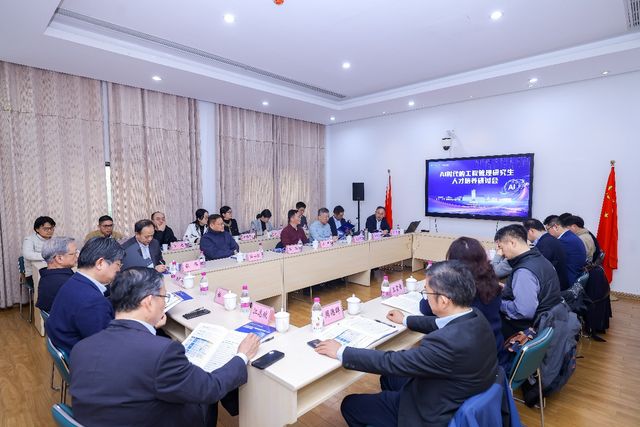
This symposium focused on the cutting-edge proposition of deeply integrating AI technology into the MEM talent cultivation system, aiming to explore effective paths for nurturing leading talents who can navigate complex engineering scenarios and possess forward-looking AI literacy. The conference consisted of two sessions: a report on the reform of MEM education at Nanjing University and a roundtable discussion on MEM talent cultivation in the AI Era, featuring rich content and in-depth exchanges.
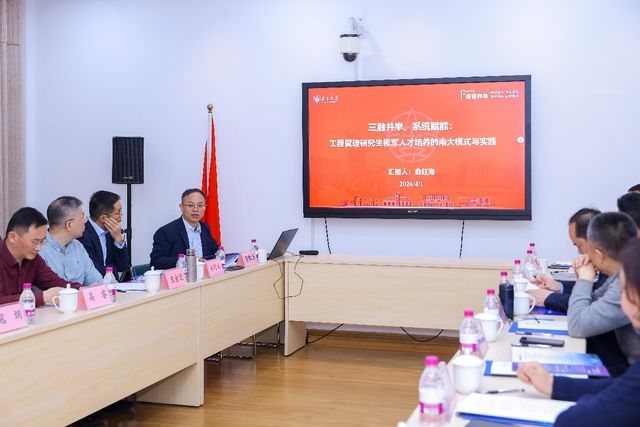
At the beginning of the conference, Yu Honghai, Dean of the School of Management and Engineering, Nanjing University, reported to the participating experts on the reform exploration and practical achievements of Nanjing University in MEM talent cultivation. Dean Yu pointed out that with the increasing systematicness and complexity of engineering activities, the cultivation of high-end engineering management talents is of great strategic significance for the sustainable development of engineering in China and globally. Against this background, Nanjing University has set the strategic positioning of cultivating industrial leading talents and constructed a “five-in-one” professional degree postgraduate cultivation system, effectively responding to the practical needs of the transformation and upgrading of the engineering management professional degree postgraduate cultivation system in the new era. Centering on cultivating students’ advanced ability to define and solve complex engineering management problems, the university has built a new “three integrations” talent cultivation system:
Integration of Engineering and Management: Breaking disciplinary barriers, reconstructing the curriculum system based on complex engineering problems rather than knowledge points, offering interdisciplinary integrated courses for project-based learning, and realizing the leap from “physical superposition” to “chemical integration” of knowledge.
Integration of Industry and Education: Abandoning “point-to-point” cooperation and building a full-process co-education mechanism featuring joint enrollment, joint training, joint topic selection, and joint evaluation.
Integration of Science and Education: Based on a number of national major and key projects such as key programs of the National Natural Science Foundation of China, introducing China’s independent knowledge system of complex system management into textbooks and classrooms, and systematically improving students’ innovation and practical capabilities.
An expert panel headed by Zheng Li, Chair of the National MEM Steering Committee, commented that the reform achievements of Nanjing University have systematically solved three major problems in traditional engineering management professional degree postgraduate education: concepts, systems, and quality assurance. It has established a new paradigm for engineering management professional degree postgraduate cultivation in the new era, promoted the high-quality development of engineering management postgraduate education in China, exerted an important influence among universities nationwide, and possesses leading and promotional value.
In the roundtable discussion session, the participating experts held heated discussions on the theme “Challenges and Opportunities for MEM Talent Cultivation in the AI Era”, covering such topics as paradigm reshaping, AI+MEM curriculum innovation, industry-education collaboration mechanisms, and practical achievement-based degree applications. The experts unanimously agreed that the rapid development of AI technology has raised the requirement of paradigm reconstruction for MEM education. Future talent cultivation should shift from traditional experience-driven to data-driven, strengthen students’ ability to define problems and design intelligent solutions, and nurture interdisciplinary talents with algorithm leadership and human-machine collaboration literacy.
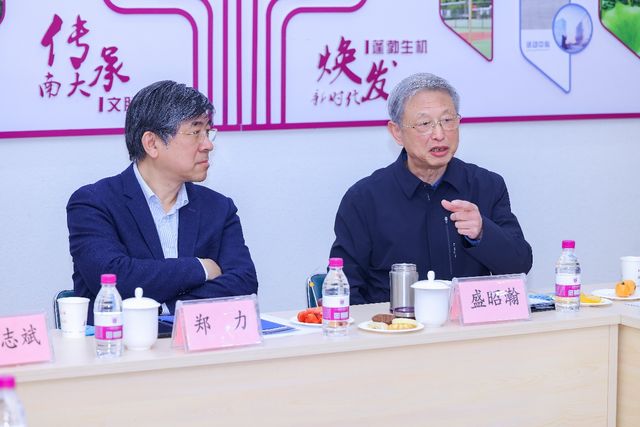
Sheng Zhaohan, Honorary Dean of the School of Management and Engineering, Nanjing University, emphasized in his concluding speech that the concept of “generalized engineering” should be established to promote the transformation of new engineering education from “technology plus management” to a multi-dimensional interdisciplinary talent cultivation model integrating management, humanities, philosophy, and other fields. He further pointed out that constructing China’s independent knowledge system with complex system management as the core is the key to addressing the challenges of the times and leading the reform of engineering management education.
This symposium not only provided valuable guidance for the School of Management and Engineering, Nanjing University to further deepen education and teaching reform and refine teaching achievements, but also built consensus and pointed out the direction for the innovative development of national engineering management postgraduate education in the AI era. Taking this symposium as an opportunity, the School of Management and Engineering, Nanjing University will continue to optimize its talent cultivation system and strive to deliver more leading talents to serve major national engineering needs and promote high-quality industrial development.