
From October 31 to November 2, 2025, the 22nd China Finance Annual Conference was successfully held at Nanjing University. Hosted by the Council of China Finance Annual Conference and Nanjing University, the conference was co-organized by the School of Management and Engineering, Nanjing University, Jiangsu Capital Market Research Association, and Jiangsu Key Laboratory of Digital Finance, with support from Zhang Yichun Education Development Foundation of Xiamen City, Beijing Juyuan Ruisi Data Technology Co., Ltd., Wharton Research Data Services, Quarterly Journal of Finance, and China Financial Academic Research Network.
With the theme of Paradigm Shift: Artificial Intelligence Reshaping Finance, this year's conference focused on the research paradigm shift and financial format reshaping driven by artificial intelligence technology, exploring the path to building a powerful financial nation. A total of 1,535 paper submissions were received for this year's conference, with more than 1,500 experts, scholars, and students from over 300 universities, research institutions, and financial institutions across the country participating in the conference, and more than 170,000 online views of the opening ceremony live broadcast, a record high, creating an unprecedented grand occasion.
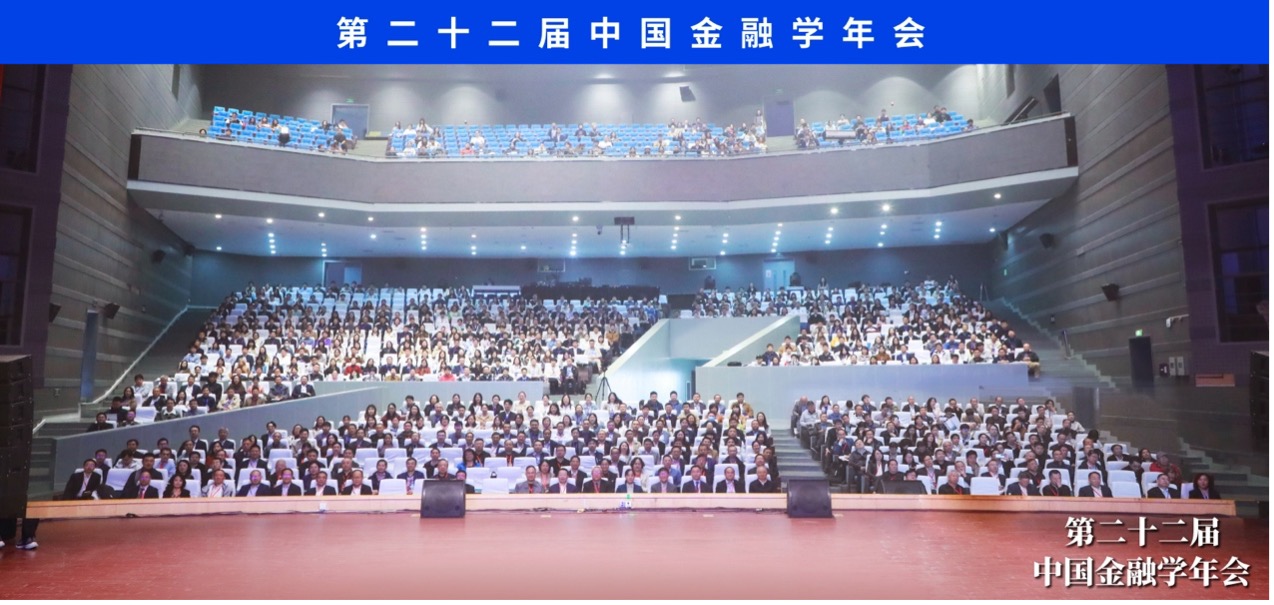
(Photo: Main venue of the annual conference)
Jiao Ruihua, Deputy Secretary of the Party Committee of Nanjing University, delivered a welcome speech. Secretary Jiao first extended a warm welcome and sincere thanks to all experts, scholars, and guests attending the conference. She stated that the hosting of this year's annual conference at Nanjing University is not only an affirmation and support for the development of the university's finance discipline but also an encouragement and motivation for future work. She looks forward to experts attending the conference to conduct in-depth discussions and exchange ideas around cutting-edge topics, making new and greater contributions to the prosperity and development of China's finance discipline, the construction of China's independent knowledge system, and the service of Chinese-style modernization.
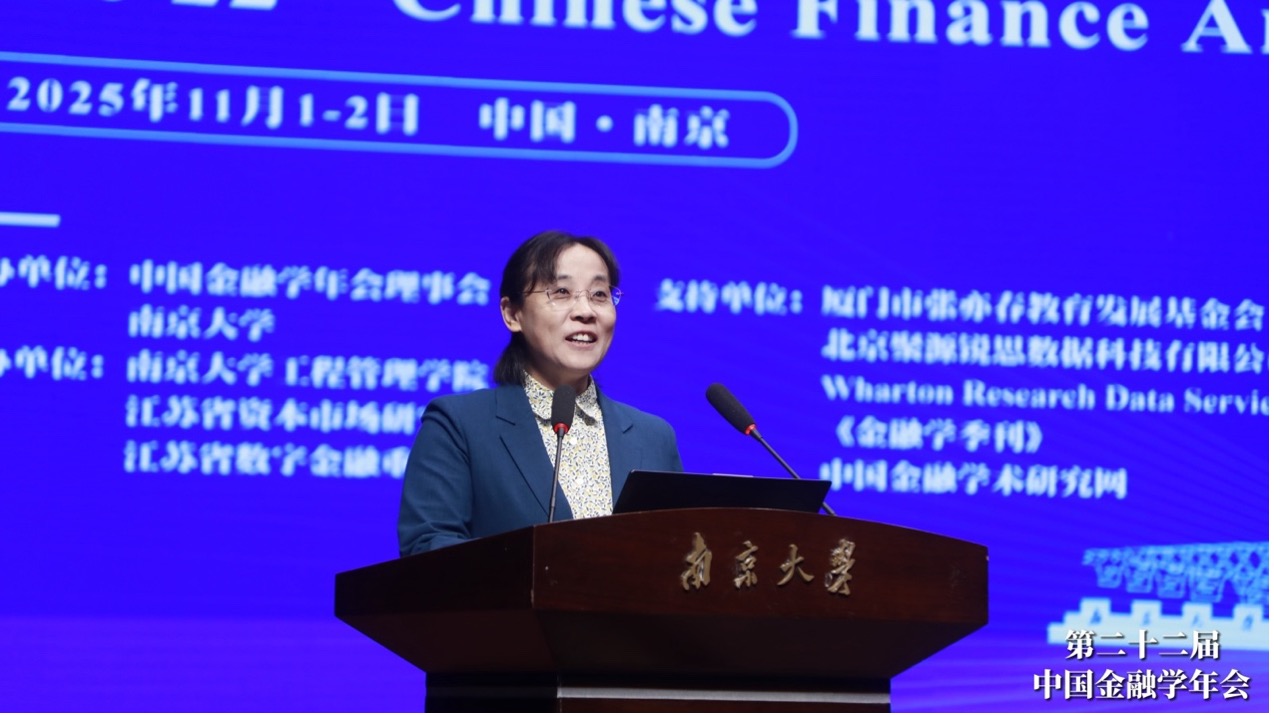
(Photo: Jiao Ruihua, Deputy Secretary of the Party Committee of Nanjing University, delivering a speech)
Professor Yu Honghai, Chairman of the 22nd China Finance Annual Conference, Professor Sun Jianqiang, Chairman of the Council of the 22nd China Finance Annual Conference, and Professor Li Xindan, Secretary-General of the Council of China Finance Annual Conference, delivered opening speeches respectively.
In his speech, Professor Yu Honghai first thanked all experts and scholars on behalf of the organizing unit, and pointed out that 2025 is the first year of China's artificial intelligence development. The release of the Deepseek R1 version on January 20 laid an important foundation for China's artificial intelligence development, and the State Council issued the Opinions on Further Implementing the 'AI+' Initiative on August 21, making a top-level design for China's development in the artificial intelligence era. Against this background, promoting the transformation and reshaping of China's finance discipline development is the common responsibility and mission of financial scholars across the country. The holding of this year's China Finance Annual Conference provides a platform for everyone to discuss academics and exchange ideas, hoping to jointly lead and create the future of China's finance in the artificial intelligence era.
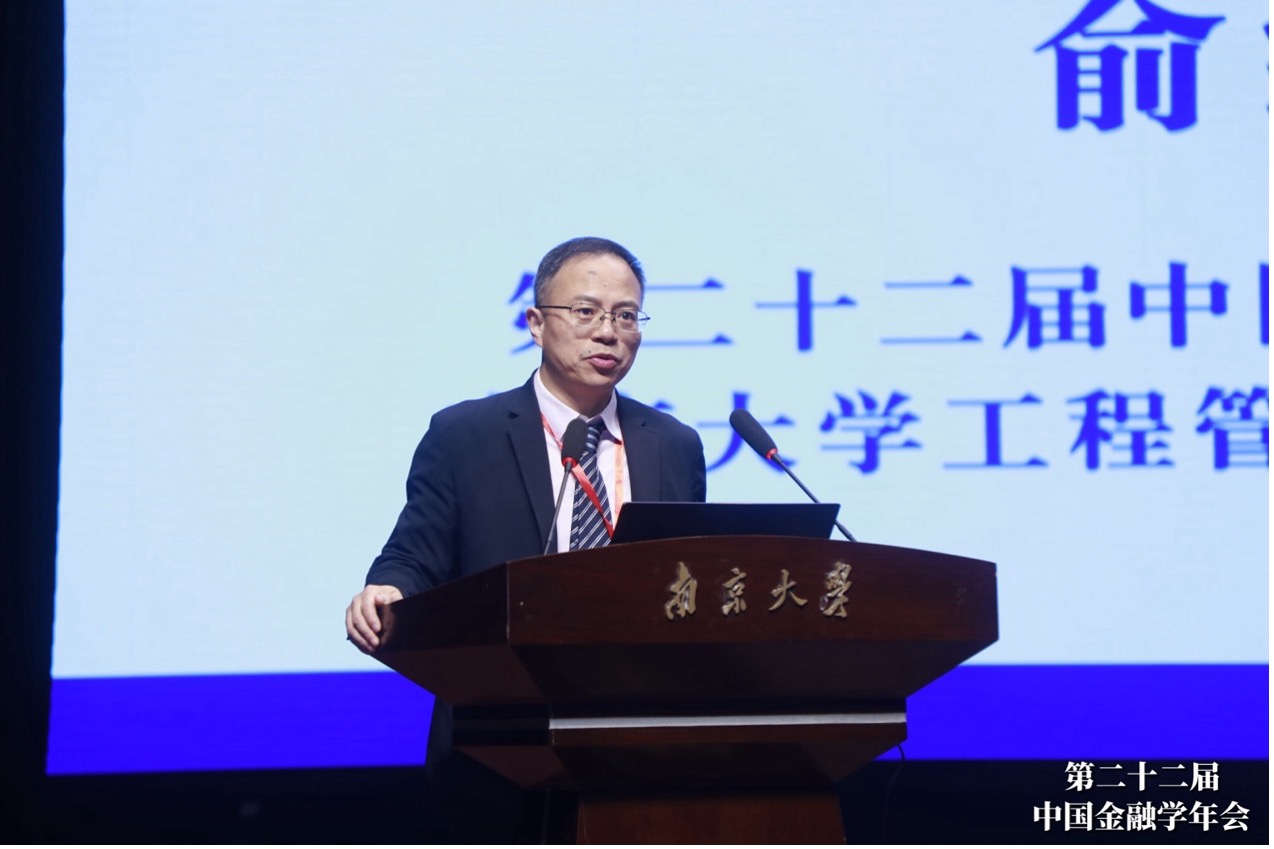
(Photo: Professor Yu Honghai, Chairman of the 22nd China Finance Annual Conference, delivering a speech)
Professor Sun Jianqiang pointed out in his speech that artificial intelligence reshaping finance is currently the biggest challenge and opportunity. The new round of technological revolution is profoundly transforming the financial industry, and all aspects such as payment systems, trading behaviors, and investment models are undergoing innovation; at the same time, artificial intelligence is also profoundly transforming finance research, with great changes taking place in data structures such as text, images, and audio, the processing of massive data, equilibrium analysis, and causal inference.
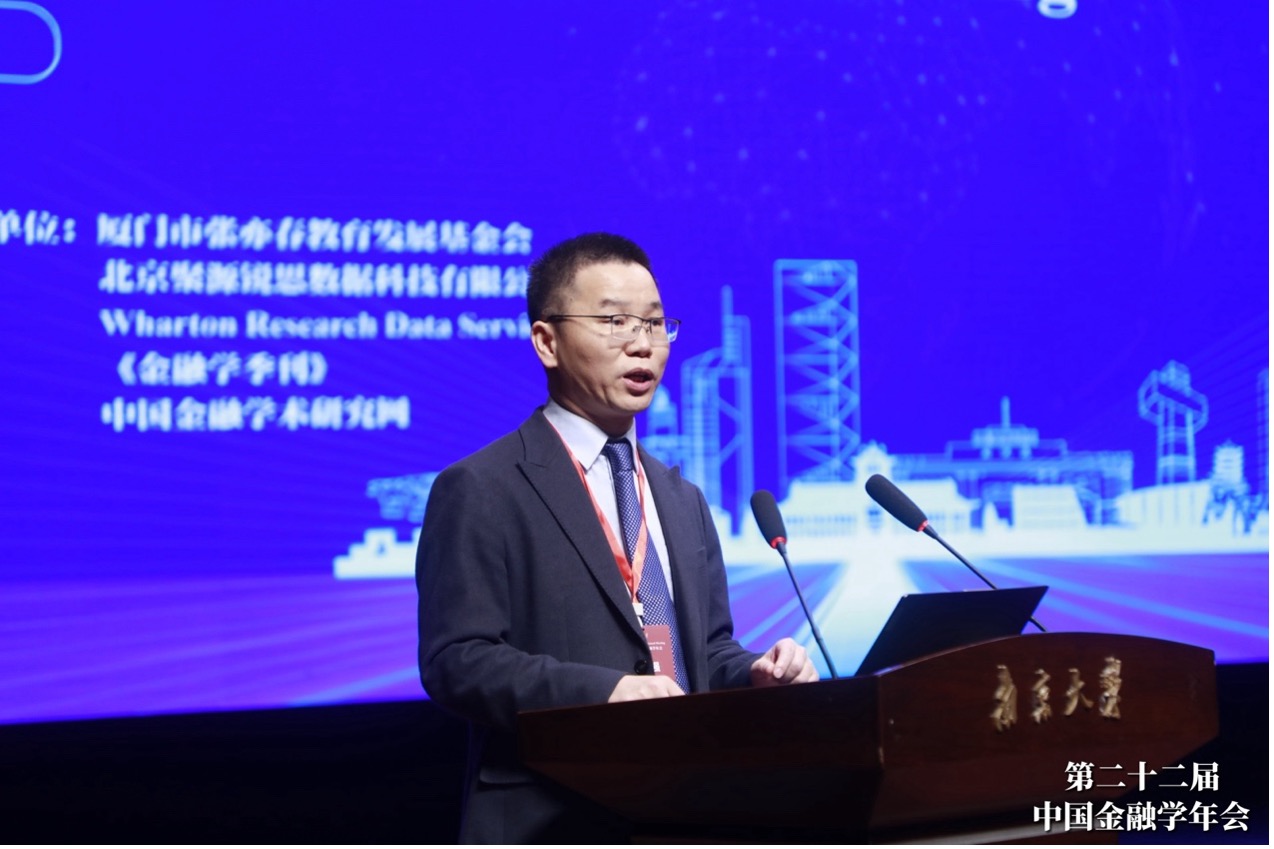
(Photo: Professor Sun Jianqiang, Chairman of the Council of the 22nd China Finance Annual Conference, delivering a speech)
Professor Li Xindan delivered a speech and stated that about one-third of the parallel sessions of this year's annual conference focus on digital finance and financial technology, fully demonstrating the academic community's high attention to AI + Finance. He pointed out that the application of new technologies such as big data, text analysis, complex networks, and generative AI is reconstructing the financial research paradigm, and called on the academic community to jointly think about new models for cultivating compound financial talents in the new era. Finally, on behalf of the council, Professor Li Xindan announced that the 23rd China Finance Annual Conference will be held at Nankai University, looking forward to writing a new chapter next year.
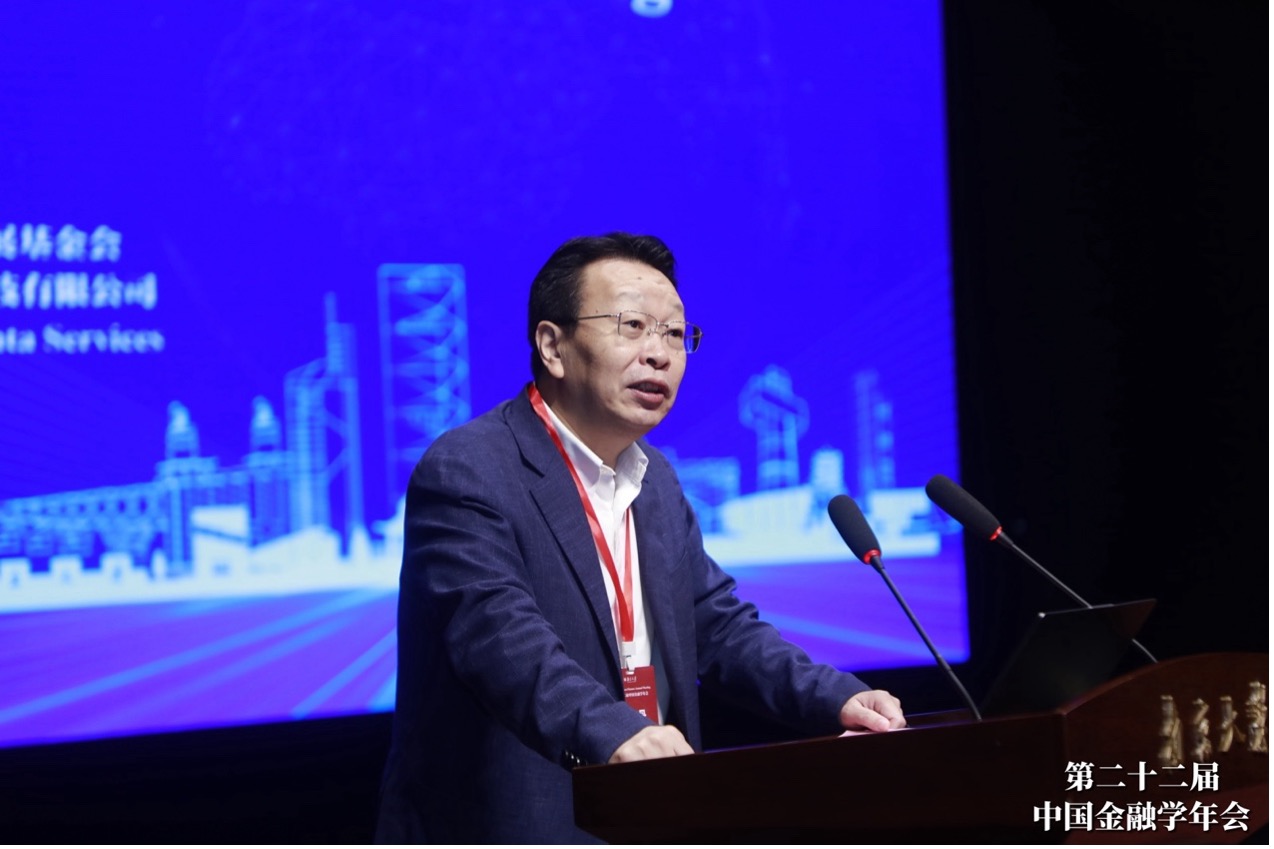
(Photo: Professor Li Xindan, Secretary-General of the Council of China Finance Annual Conference, delivering a speech)
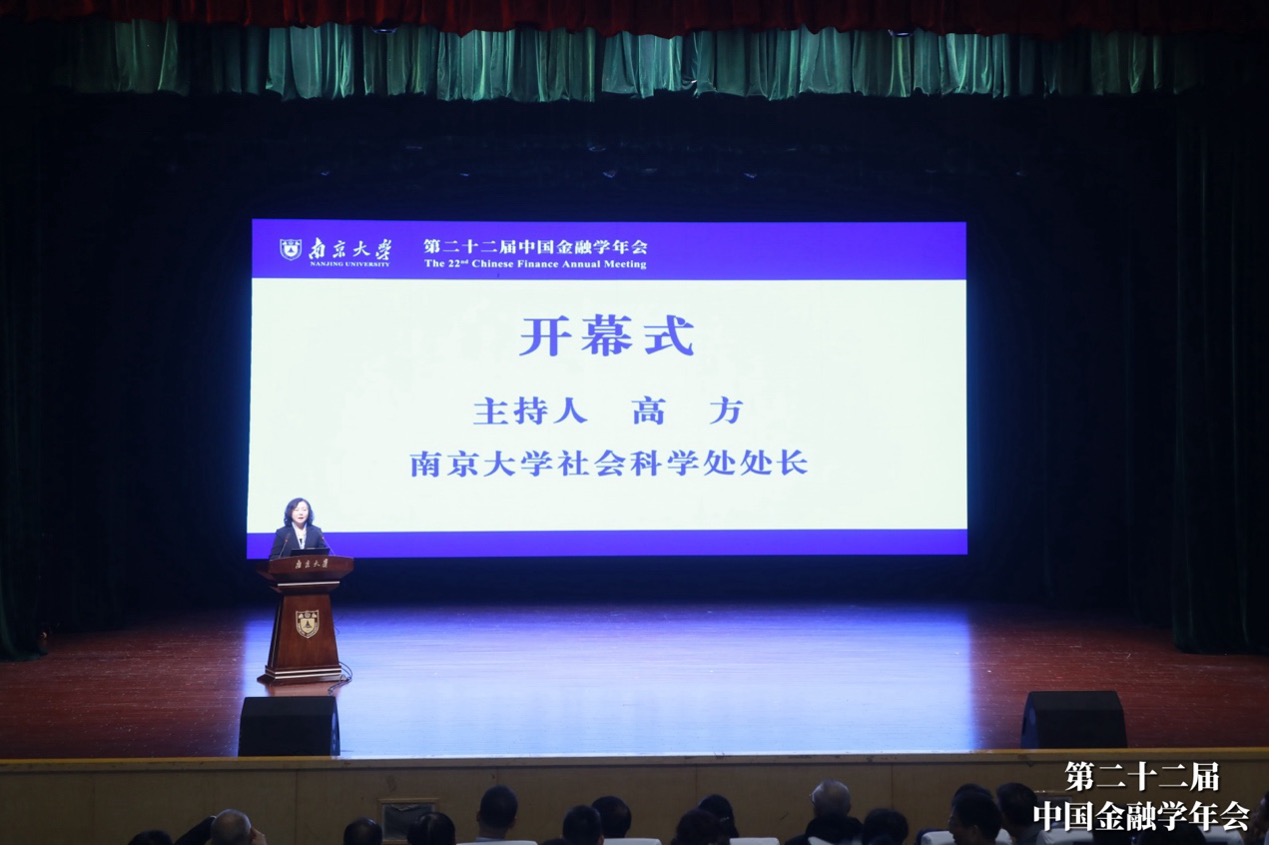
(Photo: Gao Fang, Director of the Department of Social Sciences of Nanjing University, hosting the opening ceremony)
Professor Zheng Zhenlong from Xiamen University and Professor Li Zhisheng, Vice President of Southwestern University of Finance and Economics, hosted the keynote speeches of the first and second halves respectively. Chai Hongfeng, Dean of the Institute of Financial Technology and Professor of the School of Computing and Intelligent Innovation of Fudan University, Professor Zhang Wei, Chair Professor of Tianjin University, Avanidhar (Subra) Subrahmanyam, Distinguished Chair Professor of Finance at the University of California, Los Angeles (UCLA), and Professor Yang Xuewei from the School of Management and Engineering, Nanjing University delivered keynote speeches.
Professor Chai Hongfeng delivered a keynote speech titled Research on Asymmetric Financial Risk Management. He pointed out that asymmetric financial risk is the risk passively borne by financial institutions in fund transactions with negative net expected returns, which has the characteristics of strong concealment, cross-domain transmission, and dynamic evolution. He emphasized that addressing such risks requires breaking through traditional risk control theories, constructing a penetrative supervision and intelligent identification system through complex system thinking and new technologies such as artificial intelligence, so as to fill the theoretical gap and serve the national financial security strategy.
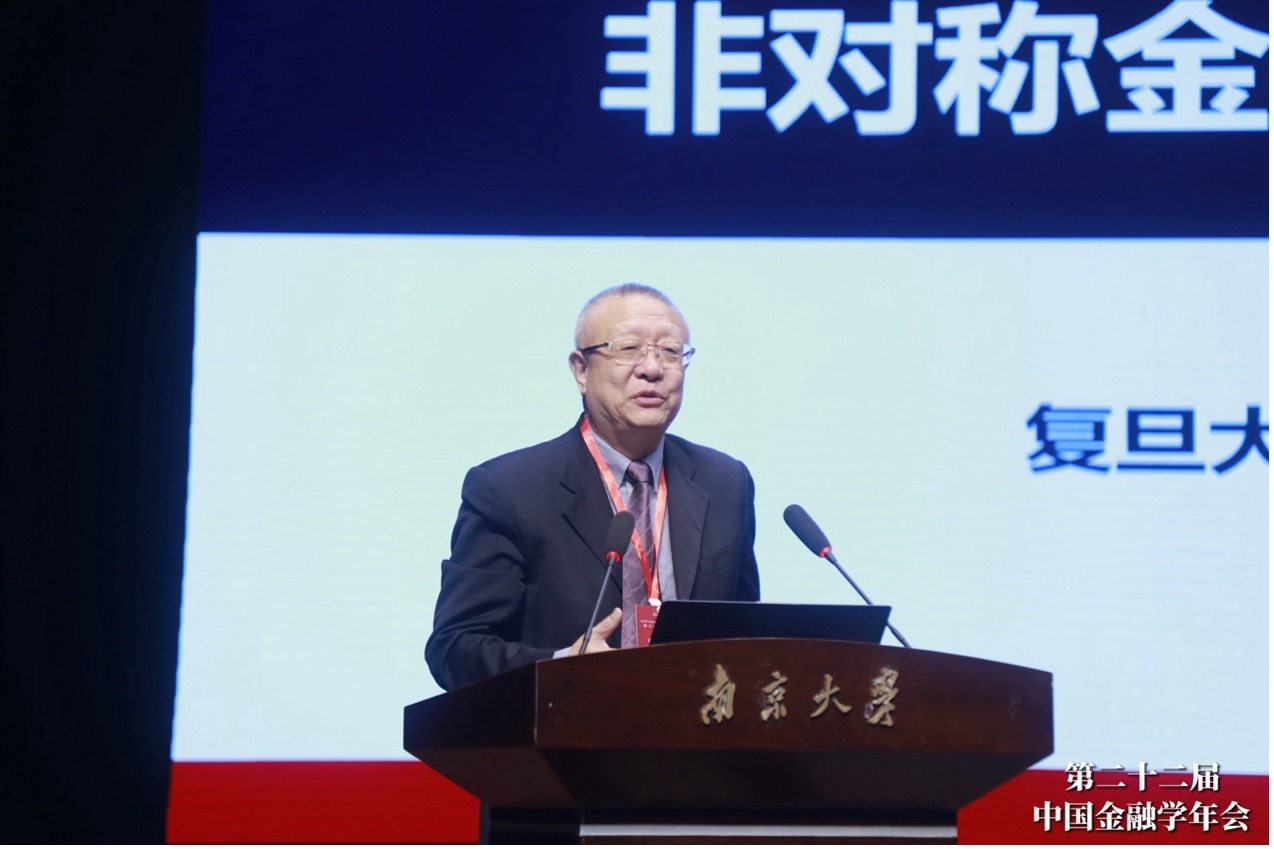
(Photo: Chai Hongfeng, Dean of the Institute of Financial Technology and Professor of the School of Computing and Intelligent Innovation of Fudan University, delivering a keynote speech)
In his keynote speech titled AI 4 Finance: Literature Analysis and Research Topic Generation Based on LLM, Professor Zhang Wei elaborated on how to use large language models to conduct intelligent analysis of massive financial academic literature and systematically construct a financial problem-AI method correlation network. He pointed out that the combination of link prediction and LLM generation can effectively explore potential research directions such as cross-modal fusion and graph neural networks in the financial field, demonstrating the important potential of AI-driven scientific research paradigm innovation.
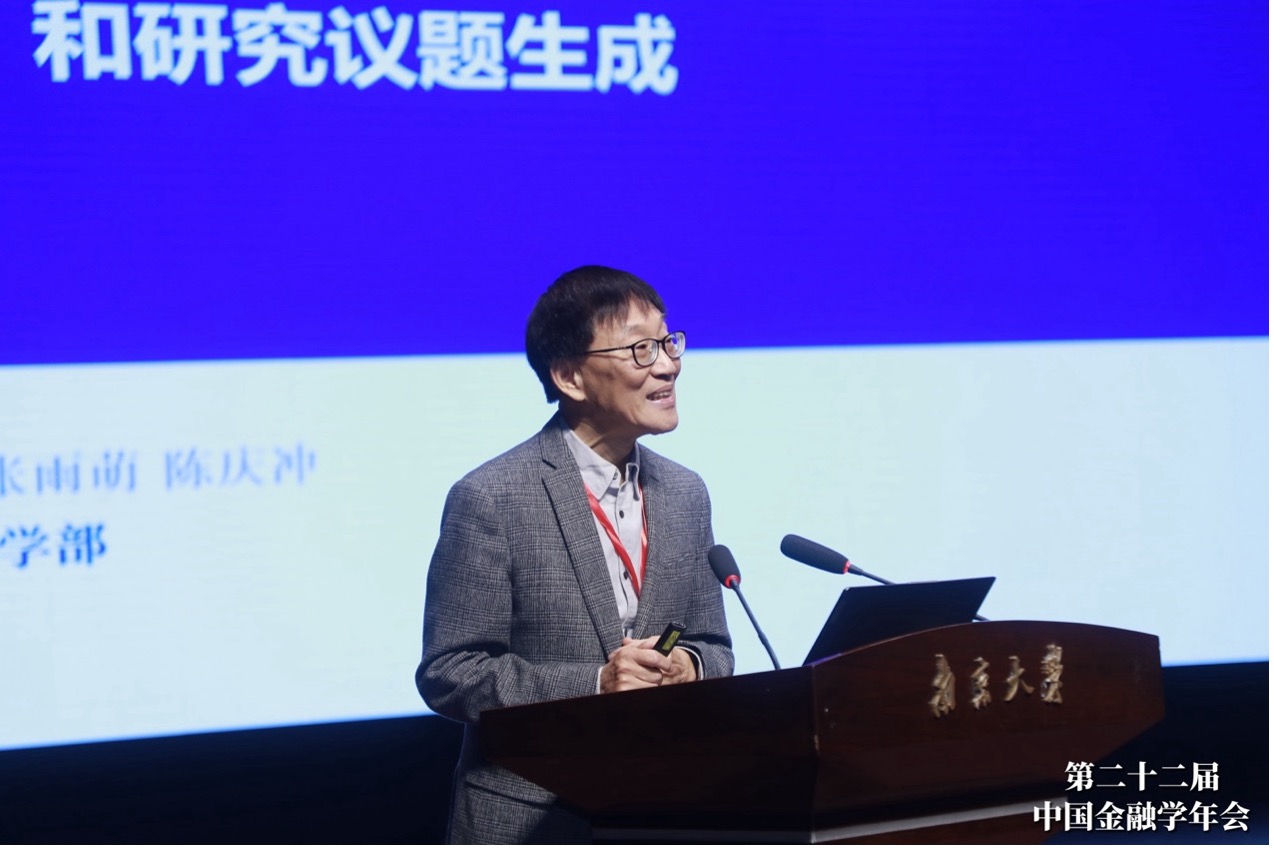
(Photo: Professor Zhang Wei, Chair Professor of Tianjin University, delivering a keynote speech)
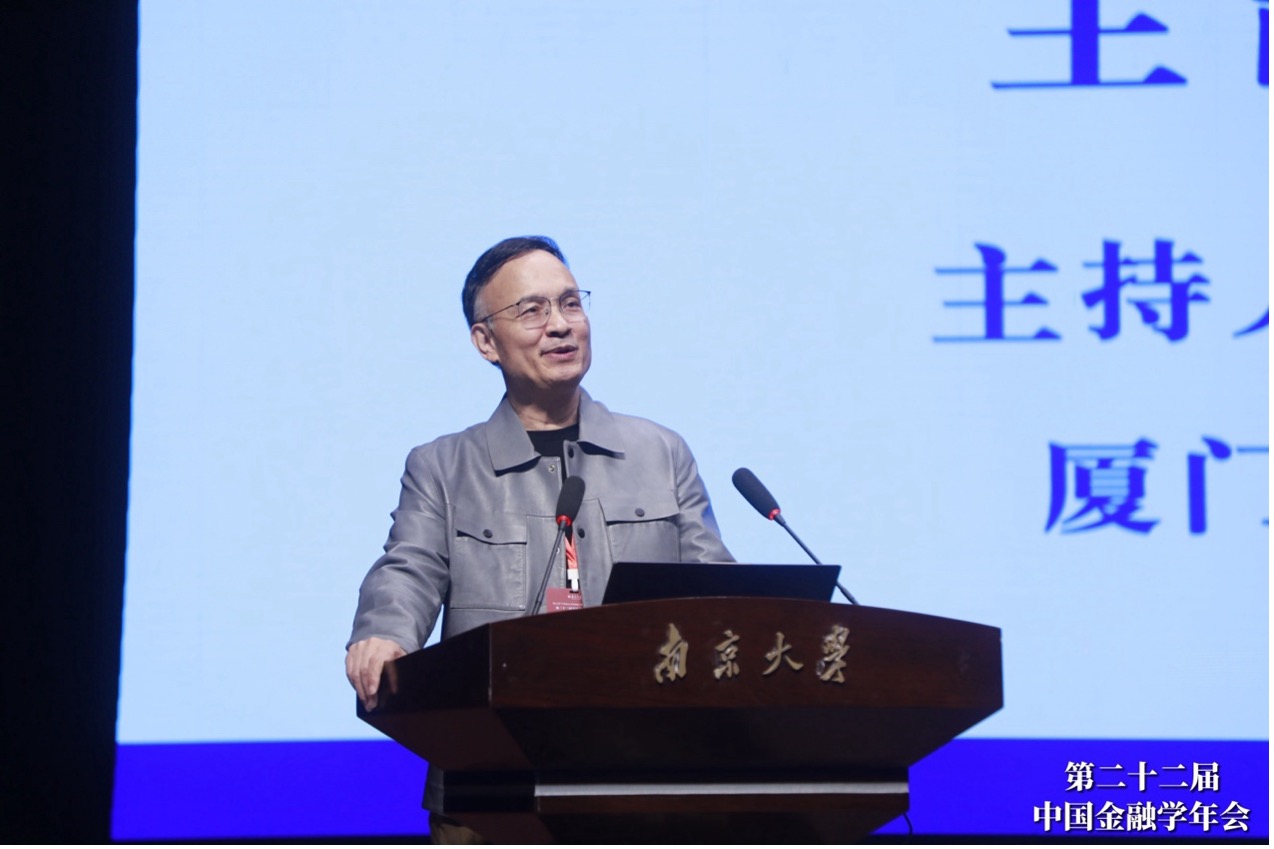
(Photo: Professor Zheng Zhenlong from Xiamen University hosting the keynote speeches of the first half)
### Why Does Equity Trading Activity Vary Across the World? An Empirical Investigation
Avanidhar (Subra) Subrahmanyam, Distinguished Chair Professor of Finance at the University of California, Los Angeles (UCLA), delivered a keynote speech titled *Why Does Equity Trading Activity Vary Across the World? An Empirical Investigation*. He elaborated on his team’s empirical research on the differences in equity trading activity globally. The study reveals that variations in national-level trading turnover are primarily driven by factors such as belief dispersion, information asymmetry, financial frictions, and behavioral traits. Specifically, analyst forecast dispersion and institutional ownership positively influence trading activity, while transaction costs, risk aversion, and ambiguity aversion exert negative effects.
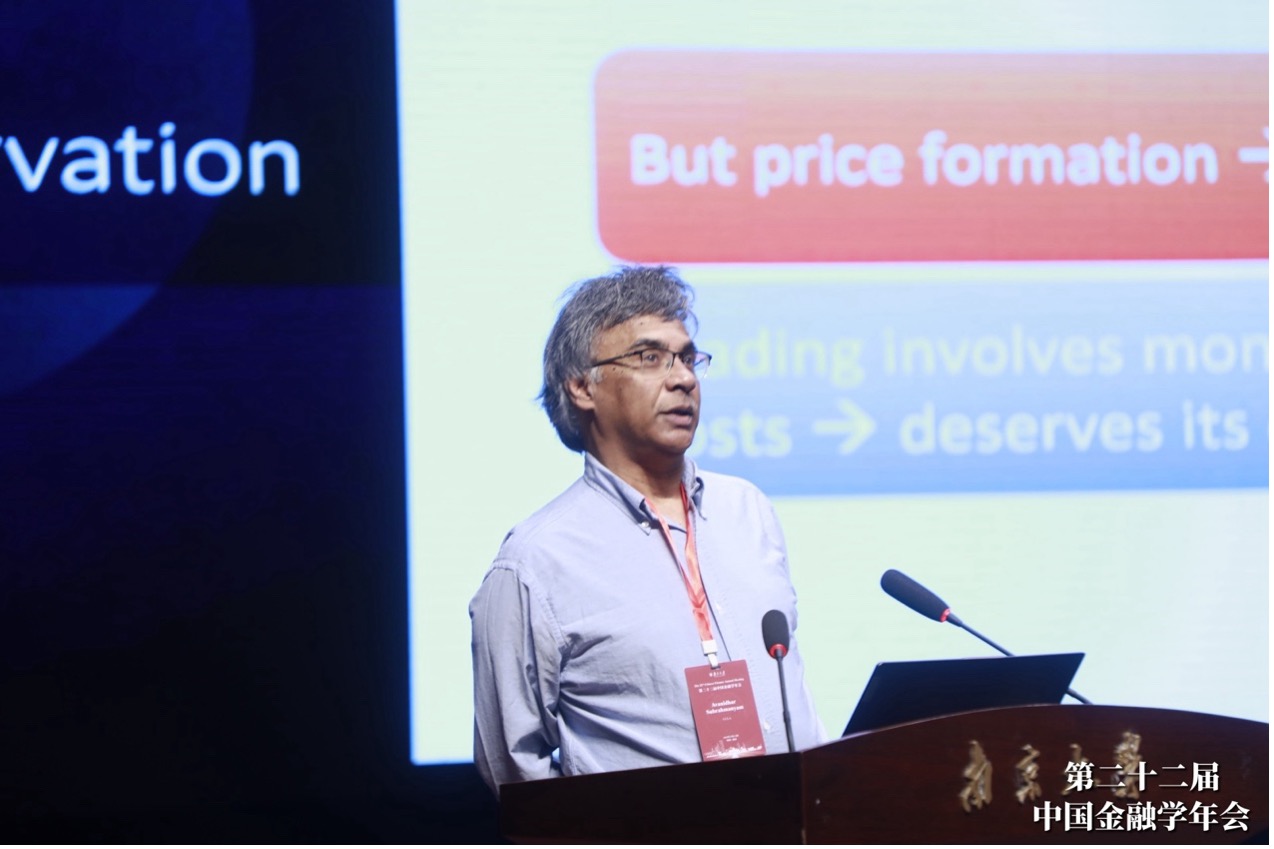
(Photo: Avanidhar (Subra) Subrahmanyam, Distinguished Chair Professor of Finance at the University of California, Los Angeles (UCLA), delivered a keynote speech)
### When Competition Backfires: Broker Learning and Commission Fees
Professor Yang Xuewei from the School of Management and Engineering, Nanjing University delivered a keynote speech titled *When Competition Backfires: Broker Learning and Commission Fees*. He noted that in highly homogeneous brokerage service markets, price differences widen as competition intensifies. This phenomenon stems from broker learning and investors’ bounded rationality. Instead of simply encouraging market competition, he suggested that regulators should reduce brokerage service prices by enhancing investors’ financial literacy and promoting data sharing.
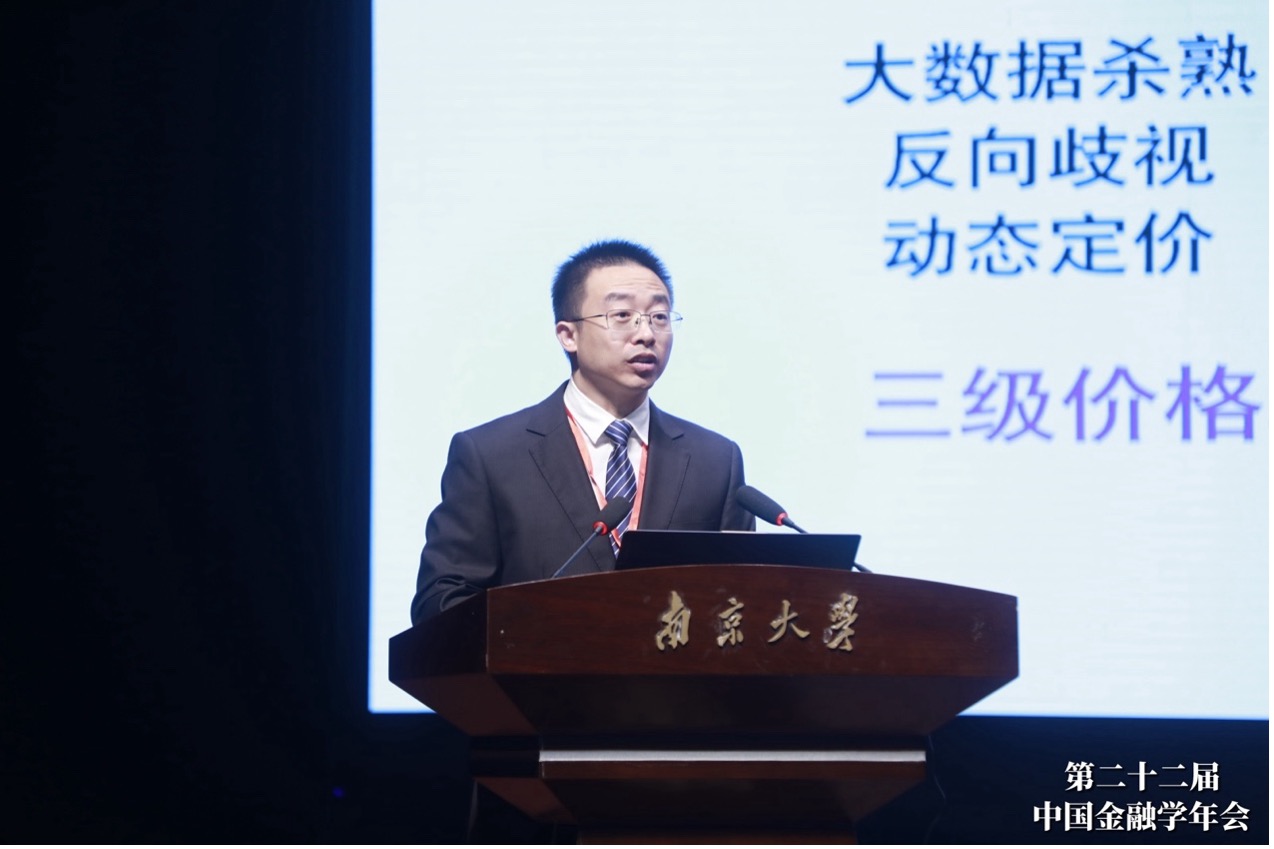
(Photo: Professor Yang Xuewei from the School of Management and Engineering, Nanjing University delivered a keynote speech)
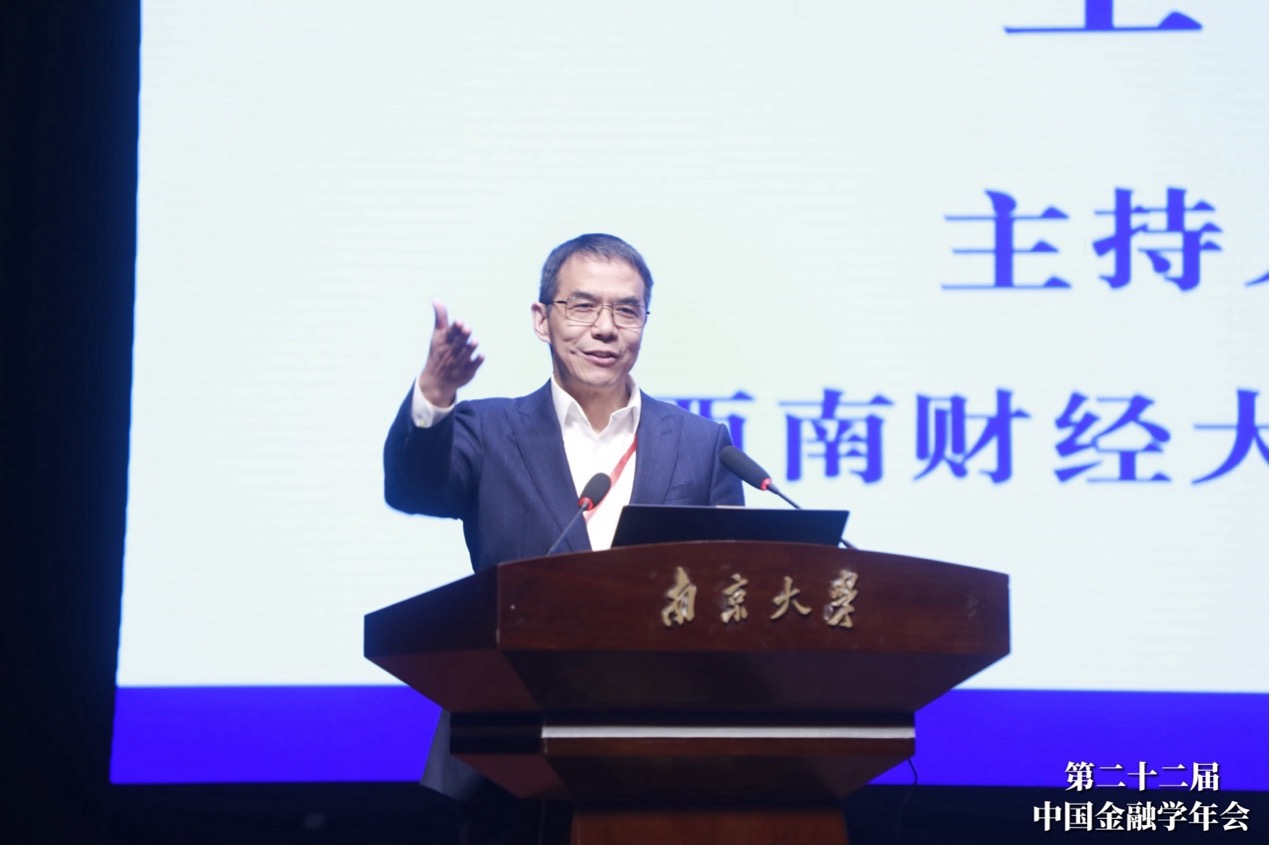
(Photo: Professor Li Zhisheng, Vice President of Southwestern University of Finance and Economics, hosted the keynote speeches of the second half)
### Award Ceremony
Zeng Yong, former President of the University of Electronic Science and Technology of China, hosted the award ceremony. He announced that after multiple rounds of double-blind reviews by the Annual Conference Council, 10 best papers were selected from 1,535 submissions. Among them, 1 paper won the First Prize, 2 won the Second Prize, 3 won the Third Prize, and 1 each received the *Quarterly Journal of Finance* Best Paper Award, RESSET Data Best Paper Award, Wharton WRDS Best Paper Award, and China Financial Research Network (CFRN) Best Paper Award.
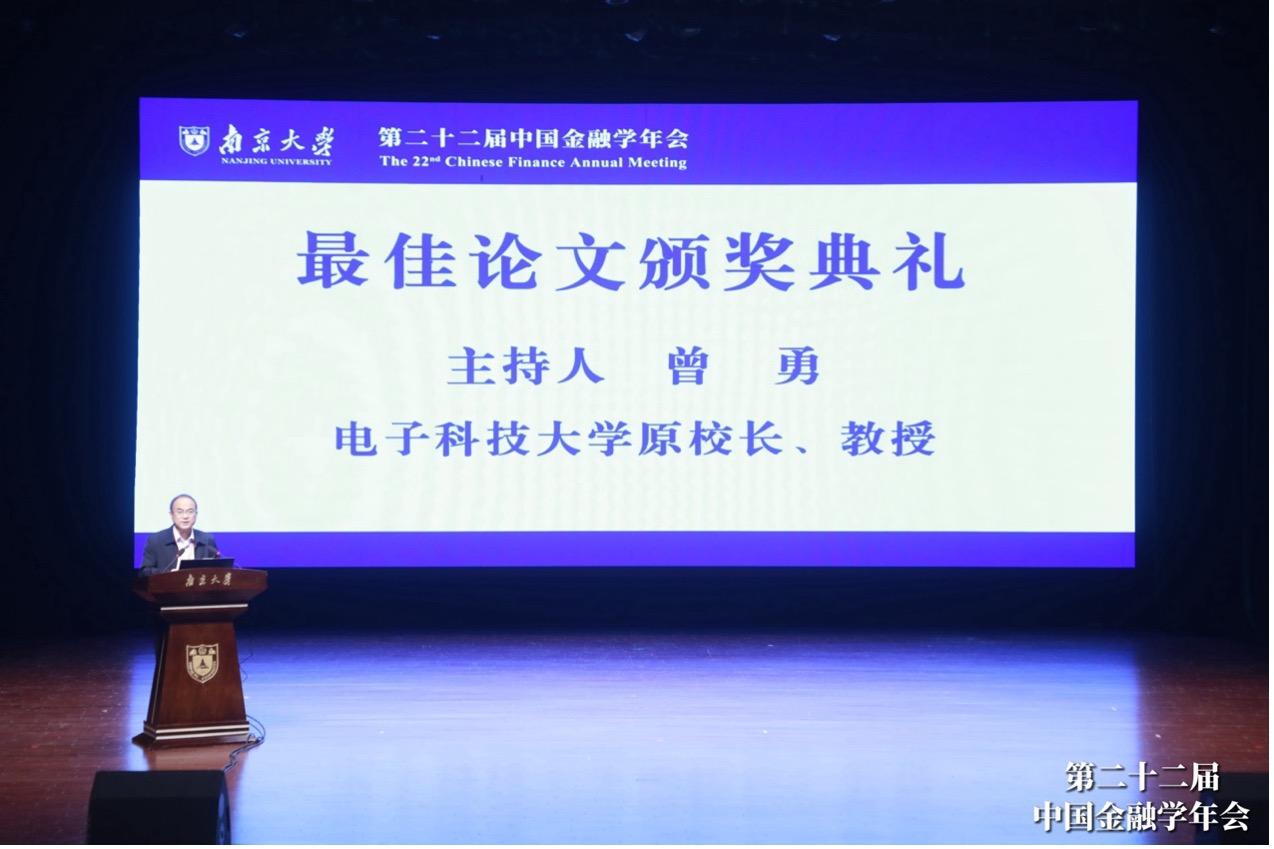
(Photo: Professor Zeng Yong, former President of the University of Electronic Science and Technology of China, hosted the award ceremony)
Wu Chongfeng from Shanghai Jiao Tong University, Yi Xingjian (President of Guangdong University of Finance), Yin Zhichao (Vice President of Capital University of Economics and Business), Ma Yaming (Vice President of Tianjin University of Finance and Economics), Zhang Xueyong (Assistant President of Central University of Finance and Economics and Dean of the School of Finance), Zhou Mingshan (Vice President of Zhongnan University of Economics and Law), and Wang Qing (Vice President of Southwestern University of Finance and Economics) served as award presenters to announce the list of winning papers. Li Shanmin (former Vice President of Sun Yat-sen University), Zou Xinyue (former Vice President of Guangdong University of Finance), Li Zhongfei from Southern University of Science and Technology, Zheng Zhenlong from Xiamen University, Yue Songqing (General Manager of RESSET Data), Zhang Xia (Deputy Director of Customer Development for Asia Pacific at Wharton Research Data Services (WRDS)), and Li Haoran (Assistant Professor of Nankai University, representative of CFRN) presented awards to the authors of the best papers.
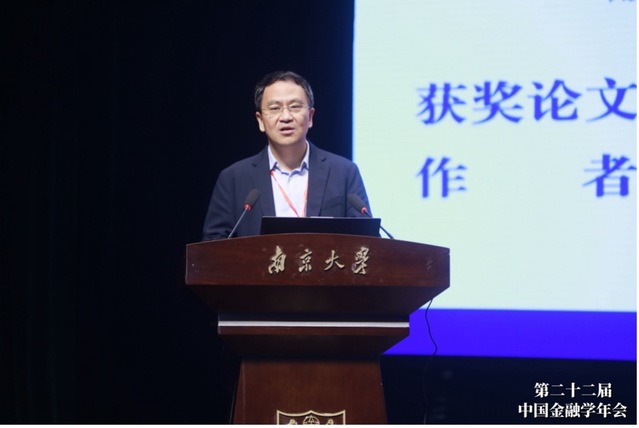
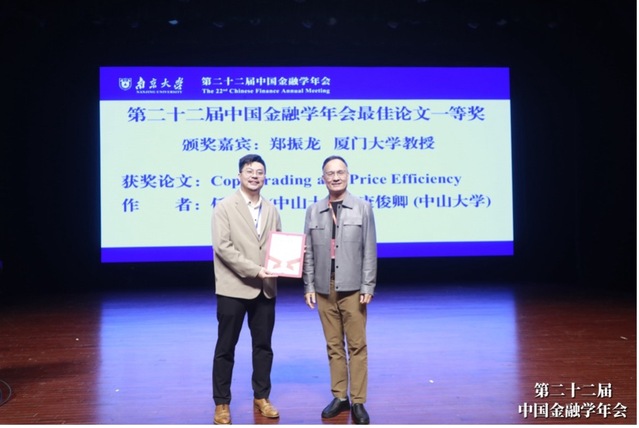
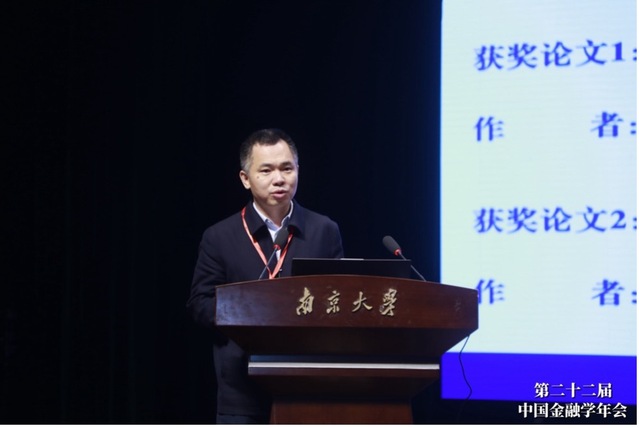
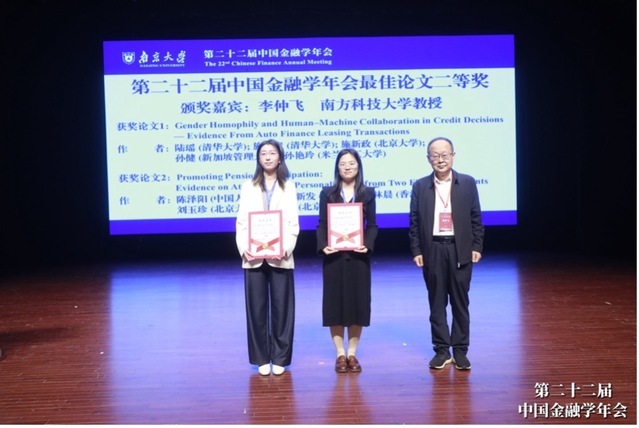
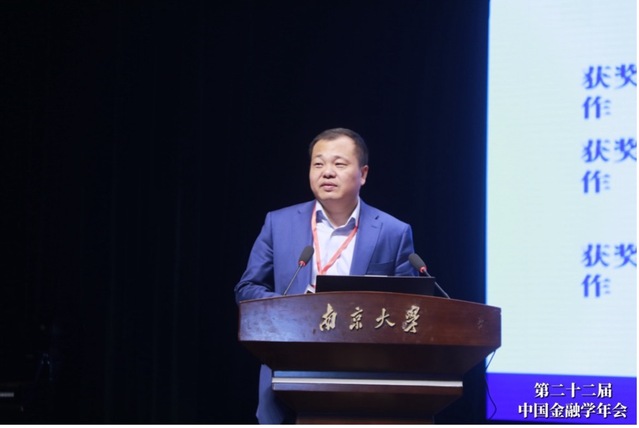
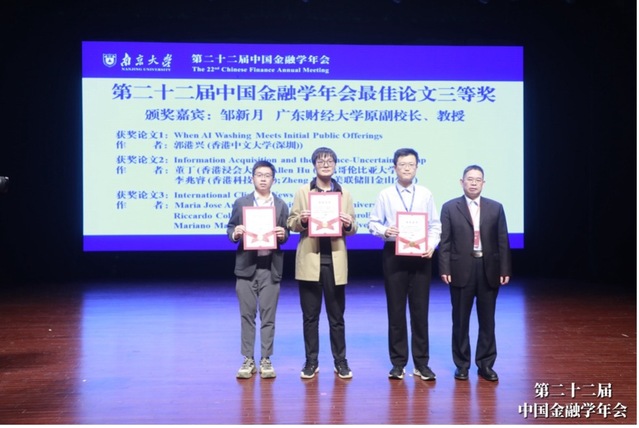
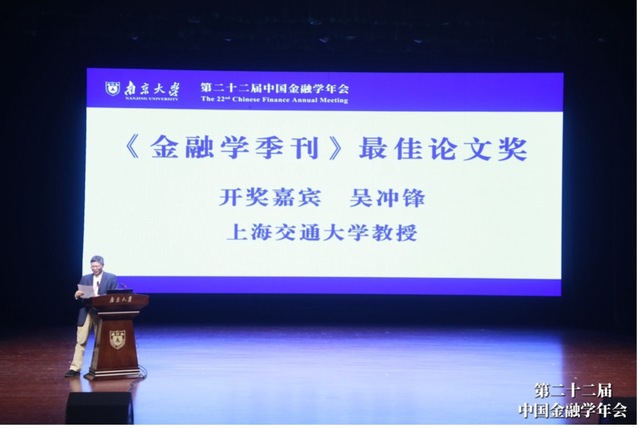
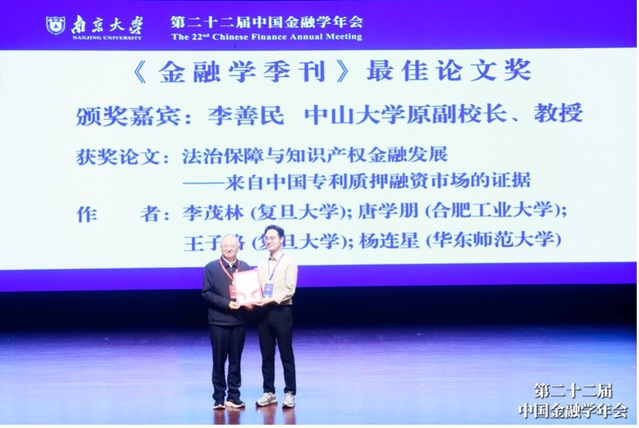
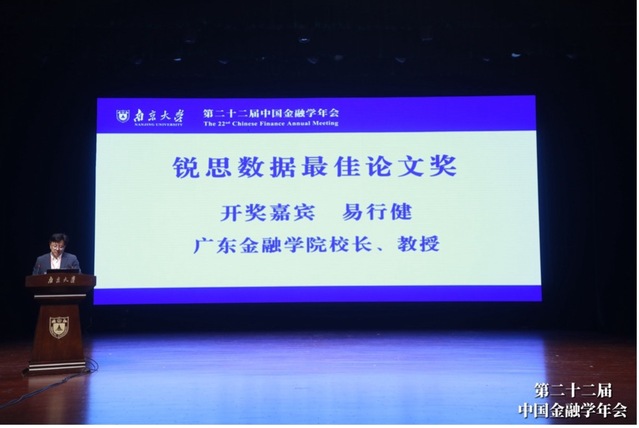
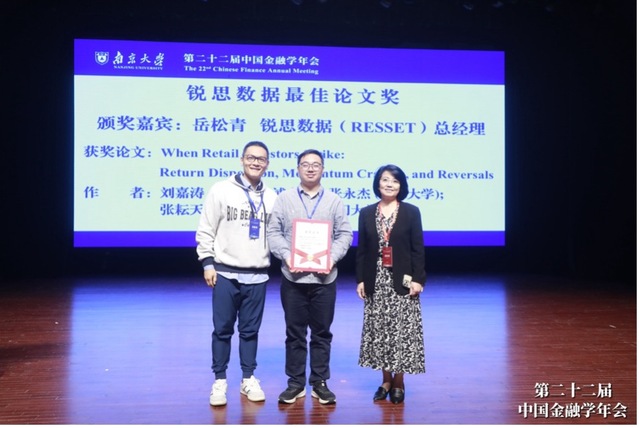
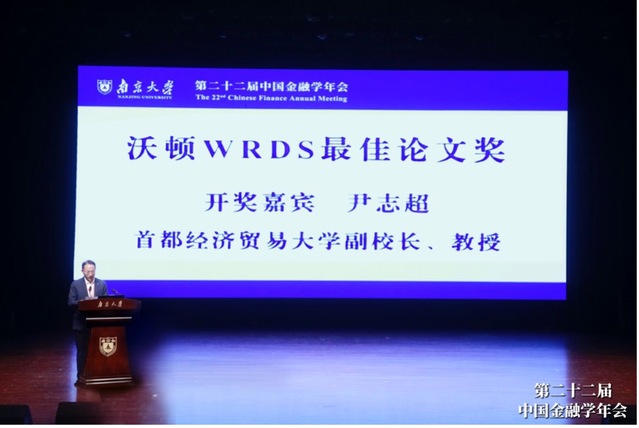
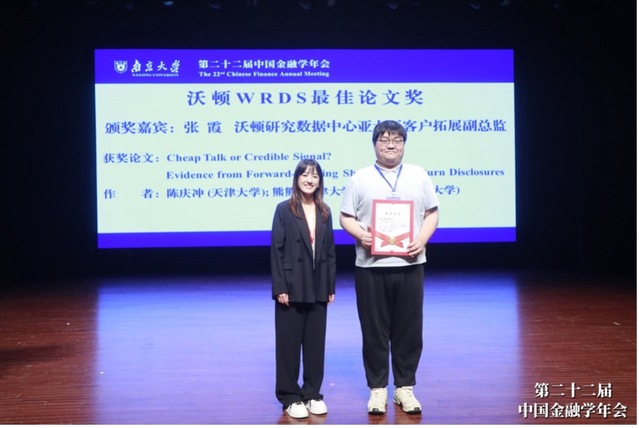
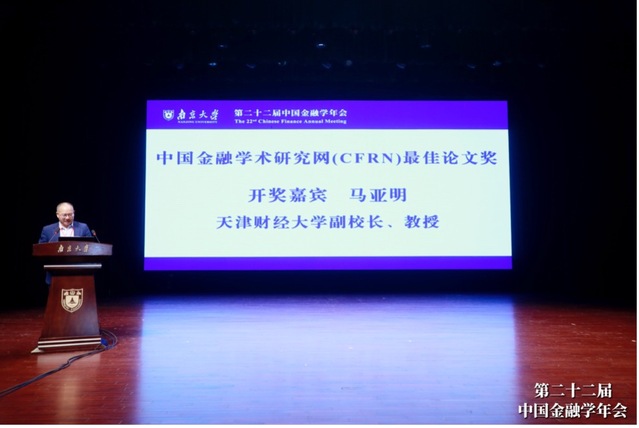
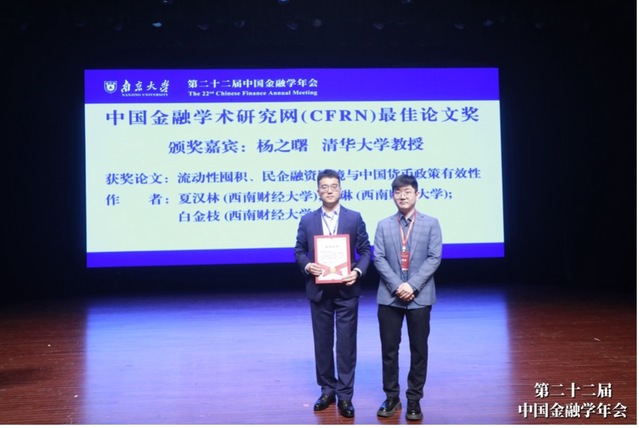
(Photos: The Best Paper Award presentation session)
### Presentation of the First Prize Winning Paper
Yang Shenggang, former Vice President of Hunan University, hosted the presentation of the First Prize winning paper at the 22nd China Finance Annual Conference. Associate Professor Kang Junqing from Lingnan College, Sun Yat-sen University, presented the award-winning paper *Copy Trading and Price Efficiency*. The study constructs a theoretical model to reveal the non-linear impact of copy trading on price efficiency. It finds that copy trading improves price efficiency through an information capital effect, but introduces systemic noise via a copy error effect. The trade-off between these two effects results in an inverted U-shaped relationship between search costs and price efficiency.
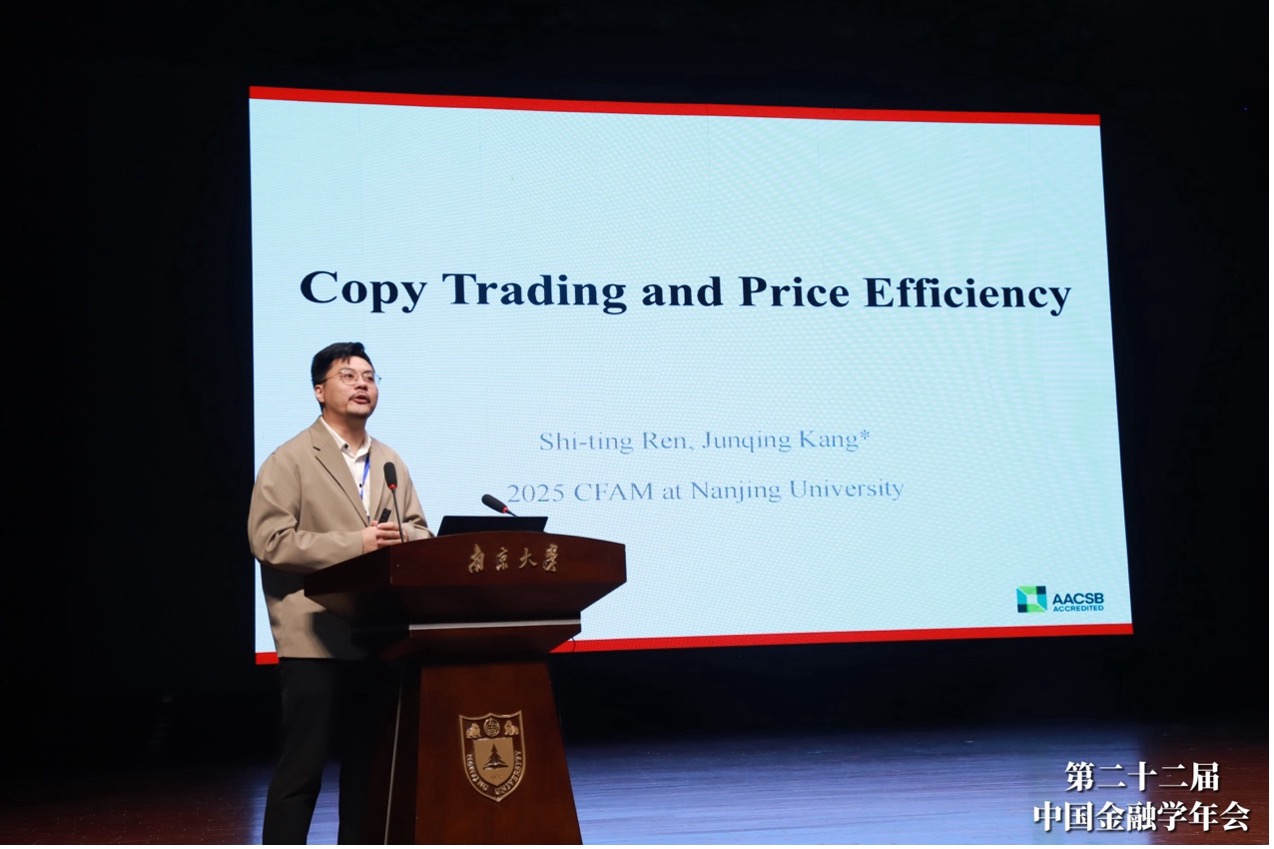
(Photo: Associate Professor Kang Junqing from Lingnan College, Sun Yat-sen University presented the report on the First Prize-winning paper of the Best Paper Award)
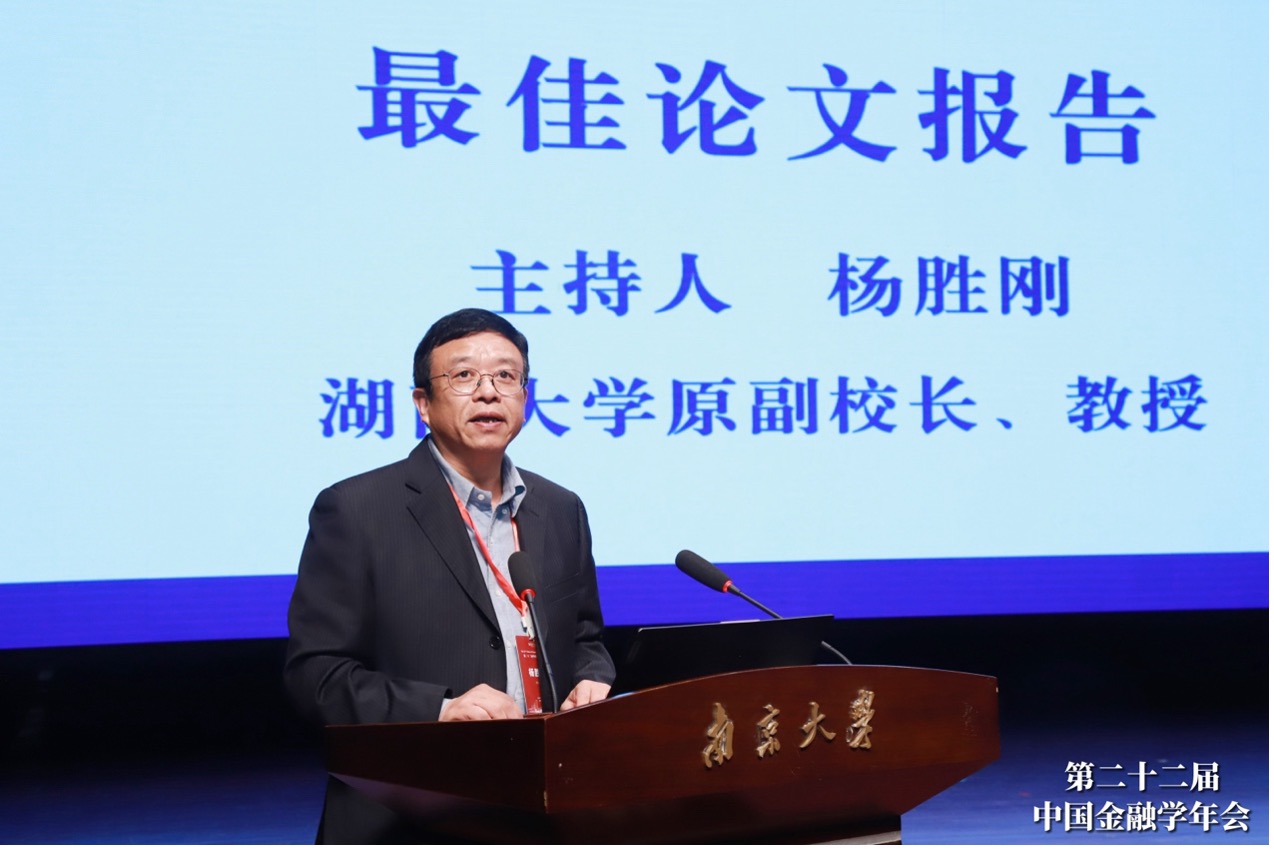
(Photo: Professor Yang Shenggang, former Vice President of Hunan University, hosted the presentation of the First Prize-winning paper)
### Parallel Sessions
On the afternoon of November 1 and November 2, the parallel sessions of the 22nd China Finance Annual Conference kicked off grandly, with 104 parallel sessions held simultaneously. The content covered numerous interdisciplinary financial fields integrated with AI technology, such as intelligent finance and market analysis, AI-driven forecasting, fintech and behavioral decision-making, AI-driven bank credit, financial information and investment behavior, AI and information disclosure quality, digital finance and industrial development, cryptocurrency and risk governance, and AI-driven financial information processing. Experts and scholars attending the conference conducted in-depth exchanges on the latest trends and cutting-edge developments in related fields.
Meanwhile, some parallel sessions of this annual conference were supported by the National Natural Science Foundation of China Major Project *Basic Theory and Empirical Research on Technology Finance*, the National Natural Science Foundation of China Special Project *Modeling and Optimization of Financial Services Based on Data and Behavior*, the National Natural Science Foundation of China Key International Cooperation Research Project *Investor Behavior Rules and Asset Pricing in the Digital Economy Environment*, the journal *Financial Regulation Research*, and the Jiangsu Key Laboratory of Digital Finance.
