
From August 16 to 18, 2024, the 1st Academic Forum of the University Alliance for Building China's Independent Knowledge System of Complex Systems Management was successfully held at the Xianlin Campus of Nanjing University. The forum was hosted by the University Alliance for Building China's Independent Knowledge System of Complex Systems Management and co-organized by the Institute of Complex Systems Management of Nanjing University, the School of Management and Engineering, Nanjing University, and the School of Management of Hefei University of Technology.
## I. Working Meeting of the Alliance Council
On the evening of August 16, 2024, the Working Meeting of the Alliance Council was held at the Xianlin International Conference Center of Nanjing University. Director representatives from 23 university governing units attended the meeting.
Professor Sheng Zhaohan, representative of the alliance's chairman unit, introduced the main work of the alliance since its establishment, including the progress of the alliance's official WeChat account, LOGO, Collection of Essays, and Series of Books. Professor Sheng Zhaohan also introduced the preparations for the Cross-Border Seminar on Complex Systems Management and New-Quality Productive Forces, the 1st Academic Forum of the Alliance, and the Youth Thematic Seminar on Artificial Intelligence and Complex Systems Management.
The meeting conducted in-depth discussions and reached consensus on important matters such as the establishment of a working committee, the basic principles for expanding alliance member units, and thematic academic seminars of the alliance. At the meeting, representatives of the council units from Fudan University and Tianjin University respectively introduced their visions for hosting the 2nd Academic Forum of the Alliance. After voting by all directors, it was decided that the 2nd Academic Forum of the Alliance will be hosted by Fudan University as the organizing unit, with Shanghai Jiao Tong University and Tongji University as co-organizers.
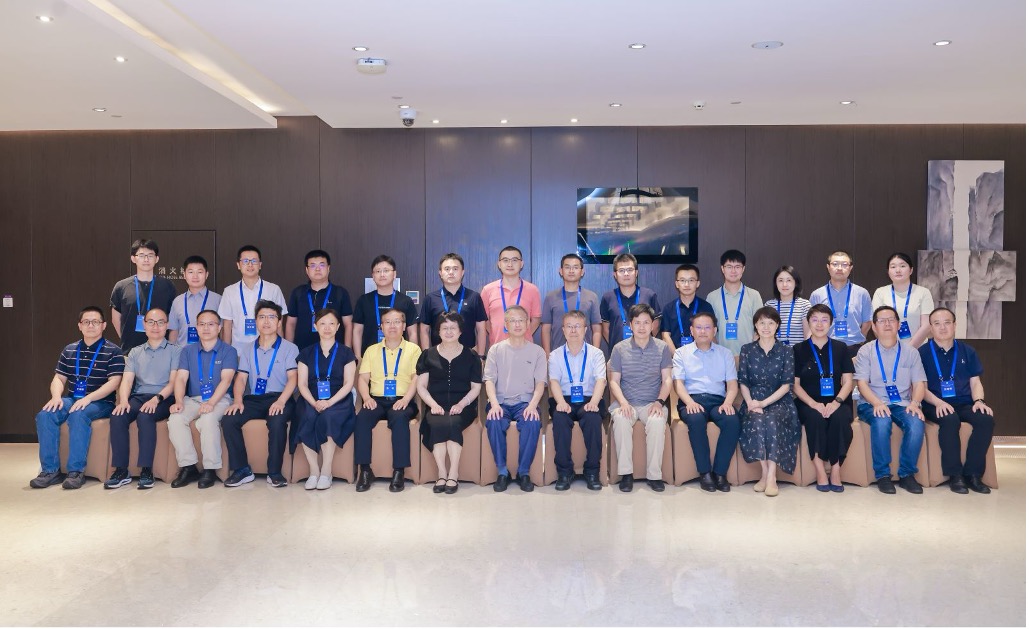
(Photo: Group photo of the Alliance Council)
## II. Opening Ceremony
On the morning of August 17, 2024, the opening ceremony of the 1st Academic Forum of the Alliance was held at the International Conference Center of Nanjing University. Suo Wenbin, Vice President of Nanjing University, Professor Gao Ziyou, Chairman of the Chinese Society of Management Science and Engineering, representatives from more than 20 alliance universities, and other invited guests attended the conference. The opening ceremony was hosted by Professor Yang Xiaoguang from the University of Chinese Academy of Sciences.
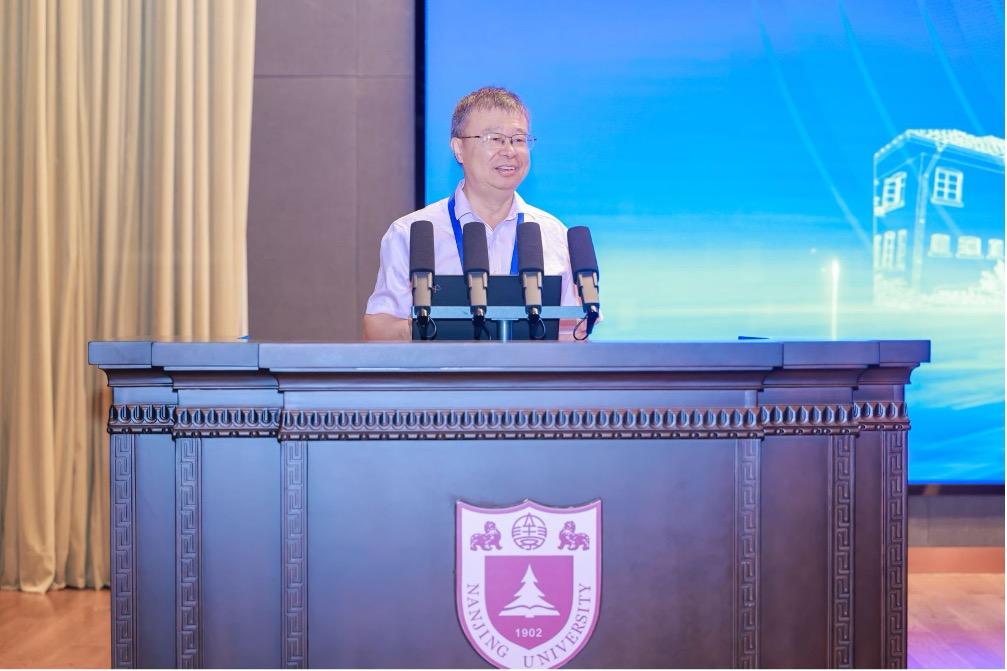
(Photo: Professor Yang Xiaoguang hosting the conference)
In his speech, Suo Wenbin extended a warm welcome to all delegates and experts on behalf of Nanjing University, and highly affirmed the significance of the alliance's academic forum. He pointed out that complex systems management has become an overall global question, Chinese question, and era question, and is a major era-related theoretical and practical issue generally concerned by various fields and industries in China. Complex systems management is of great academic significance for the development of various undertakings in China, especially for Chinese-style modernization. Research on complex systems management is very necessary and urgent for implementing the central government's major strategic guidelines, strengthening the top-level design and overall planning of national governance, and solving important complex practical problems.
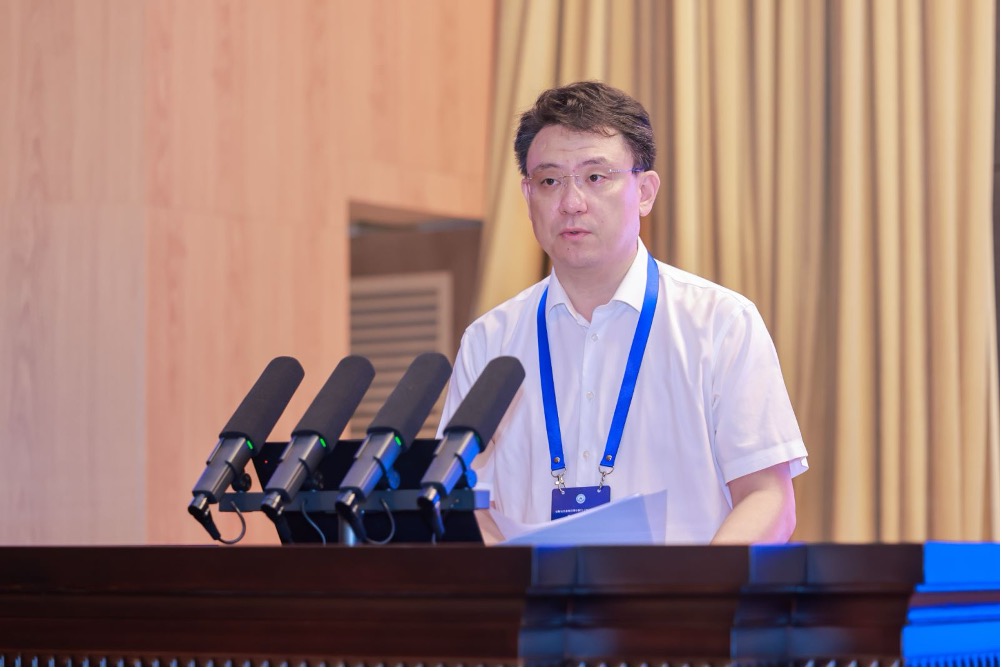
(Photo: Suo Wenbin, Vice President of Nanjing University, delivering a speech)
He pointed out that Nanjing University and its predecessors have always breathed with the times and shared the fate of the nation in the course of more than 120 years of running the school, making due contributions to national prosperity and national rejuvenation. Over the years, Nanjing University has actively encouraged and supported scholars from relevant social science colleges as well as liberal arts and science colleges to carry out interdisciplinary collaborative research on complex systems management issues, such as collaborative research on complexity science issues by mathematics, computer science, automation, and management disciplines; environmental science and management disciplines. The achievements in complex systems management research have been positively affirmed. Academic research on complex systems management was listed as one of the two important achievements in the field of philosophy and social sciences of Nanjing University in 2022. In July 2023, the interdisciplinary Institute of Complex Systems Management of Nanjing University was specially established to coordinate and integrate the academic research forces and resources of complex systems management across the university. Standing at a new era and new journey, Nanjing University will fully support the construction of the alliance, and together with brother universities of the alliance, continuously strengthen exchanges, exploration, and innovation, work together to promote the construction of the management discipline, and strive to contribute Nanjing University's wisdom and strength to the construction of the disciplinary system, academic system, and discourse system of philosophy and social sciences with Chinese characteristics, and contribute to the comprehensive promotion of Chinese-style modernization and the cause of building a powerful country and national rejuvenation.
Professor Gao Ziyou pointed out in his speech the importance of complex systems management as an emerging development direction in the field of management science and engineering. In the 20th century, humanity achieved tremendous scientific achievements, greatly deepening the scientific understanding of the objective world. However, the limitations of reductionism have become increasingly apparent. Complexity research is a bridge spanning the gap between micro and macro, and an effective path to achieve from part to whole. He emphasized that when conducting research on complex systems management, special attention should be paid to the core scientific issue of the relationship between the whole and the part, that is, emergence. It is necessary to build China's independent knowledge system of complex systems management from the aspects of complexity research thinking, system instantiation, and model methods. He expressed his expectation that this conference will stimulate new academic ideas and innovations, and jointly promote the high-quality development of complex systems management and China's independent knowledge system.
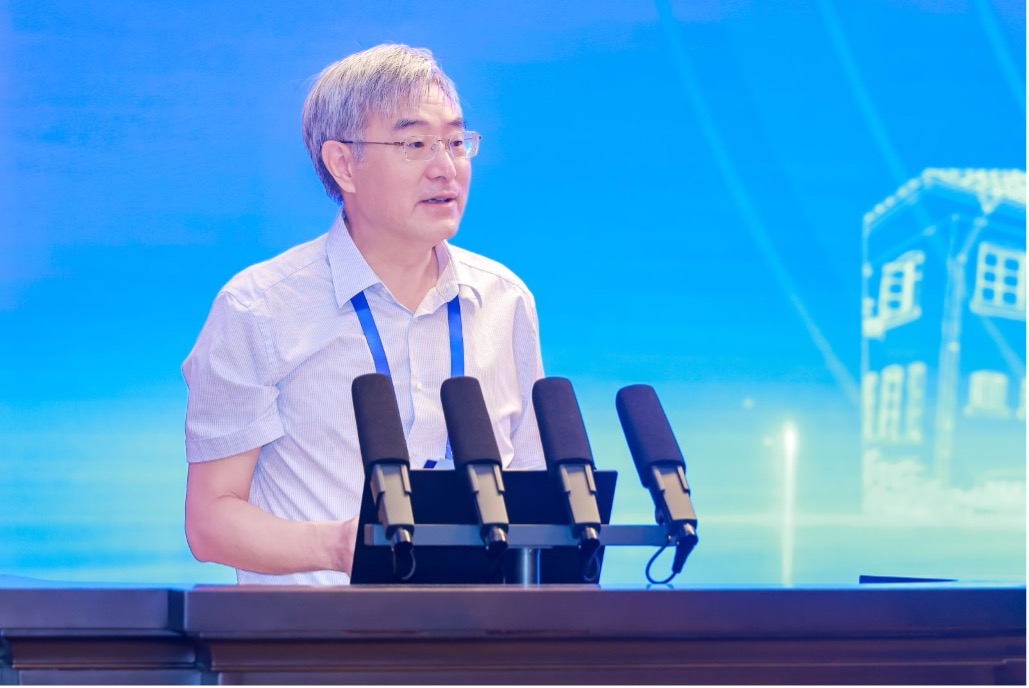
(Photo: Professor Gao Ziyou, Chairman of the Chinese Society of Management Science and Engineering, delivering a speech)
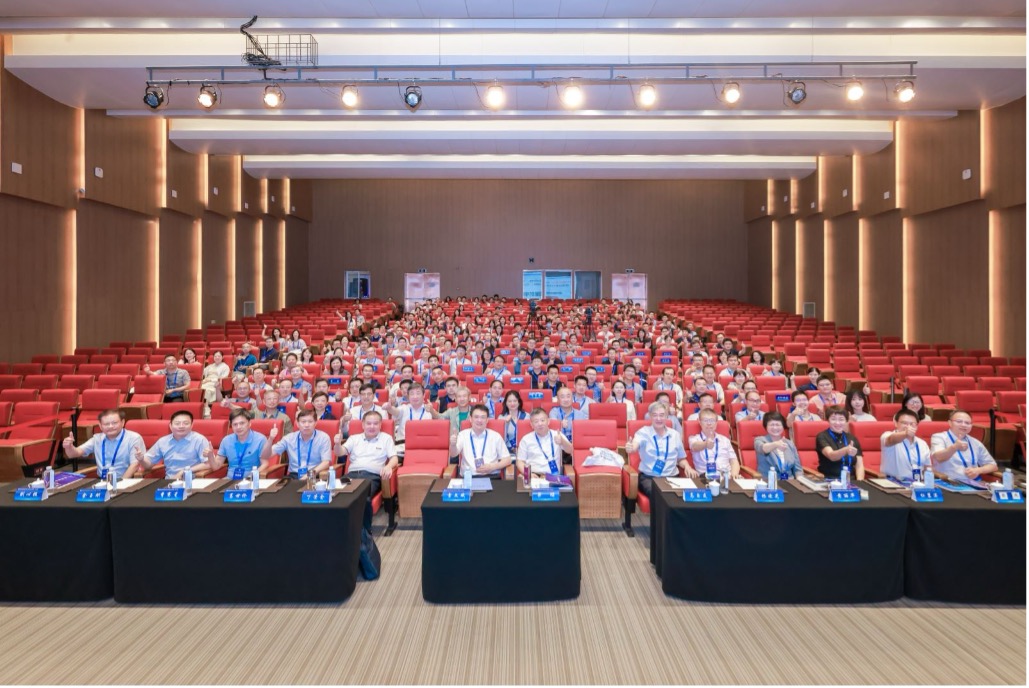
(Photo: Group photo of the opening ceremony and academic forum)
## III. Plenary Reports
After the opening ceremony, the academic forum was held at the International Conference Center of Nanjing University. Outstanding experts and scientists from multiple fields of complex systems management, such as human-machine game, scenario modeling technology, digital innovation, artificial intelligence, logistics systems, and major aerospace engineering, delivered cutting-edge plenary reports at the conference. The plenary reports were hosted by Professor Liu Xinbao from the School of Management of Hefei University of Technology, Professor Li Minqiang from Tianjin University, Professor Yu Honghai from the School of Management and Engineering, Nanjing University, and Professor Wu Junjie from Beihang University respectively.

(Photo: Hosts of the plenary reports)
At the forum, Professor Yang Xiaoguang from the Academy of Mathematics and Systems Science of the University of Chinese Academy of Sciences delivered an academic speech titled Systems Engineering in the Digital Intelligence Era, proposing that promoting the reform and development of the systems engineering discipline, closely combining with artificial intelligence to develop systems engineering theories and methods, and pioneering new directions of systems engineering based on artificial intelligence require efforts to develop: the theoretical reform of systems engineering embedded with artificial intelligence, systems engineering methods integrated with digital intelligence technology, systems engineering meta-universe, data systems engineering, and systems engineering large language models.
Professor Liang Liang from the School of Management of Hefei University of Technology delivered an academic report titled Theory and Experiments of Human-Machine Game, summarizing the development history and technical progress of human-machine game in different types of games. He pointed out that although artificial intelligence has made remarkable progress in board games, card games, and video games, it still faces challenges such as algorithm versatility and transparency. Future research will focus on improving the universality and interpretability of algorithms to further promote the development and application of AI technology.
Researcher Zhang Hongjun, Member of the Science and Technology Committee of China State Shipbuilding Corporation, delivered an academic speech titled The Way to Cope with Complexity—The Organic Adaptability Theory of Systems Engineering. On the basis of system vitality, drawing on the ideas of nine levels of technology readiness and six reliability characteristics, he designed a method for classifying and evaluating ten levels of system vitality using system adaptability index, and proposed a new idea of 1+5 for general quality characteristics, hoping to achieve integration and unification in the professional and general characteristics of systems engineering.
Professor Huang Lihua from School of Management, Fudan University delivered an academic speech titled A Preliminary Exploration of the Logic of Digital Innovation from the Perspective of Complex Systems Management, conducting a preliminary analysis of the logic of digital innovation from the perspective of complex systems management at the micro level (taking automobile enterprises as an example) and the macro level (taking the data industry as an example).
Professor Wang Haiyan from the School of Economics and Management of Southeast University delivered an academic speech titled Big Data-Driven Scenario Modeling Technology for Complex Systems Management, introducing that scenario-oriented has become a new research paradigm for complex systems with irreversible reductionist attributes (non-additive integrity, complex integrity), the key technologies of big data-driven scenario modeling for complex systems management, and the process of big data-driven scenario modeling for complex systems management.
Professor Hu Xiangpei from the School of Economics and Management of Dalian University of Technology delivered an academic speech titled Research on Operation Optimization Methods of Robot Mobile Shelf Systems Based on Correlation Networks, introducing the opportunities and challenges faced by robot mobile shelf systems, analyzing their key problems and complexity, proposing solutions for the operation optimization of robot mobile shelf systems, establishing optimization methods for storage location allocation and order batching and sorting based on correlation networks, and putting forward future research ideas.
Professor Zhu Qinghua from Antai College of Economics and Management of Shanghai Jiao Tong University delivered an academic speech titled ESG in the Supply Chain: Research and Reflections from a Chinese Perspective, introducing three related studies on ESG regulations of multinational corporations' supply chains in China, the response of Chinese small and medium-sized suppliers, and the decisions of Chinese enterprises selling in both domestic and foreign markets, and further expanding on the thinking of circular supply chain models that consider both resource conservation and low-carbon development.
Professor Zeng Saixing from Antai College of Economics and Management of Shanghai Jiao Tong University delivered an academic speech titled The Evolution of Complex Equipment Innovation Networks for Major Projects, introducing the basic structure, emergence process, evolution mechanism, and governance strategies of complex equipment innovation networks for major projects, providing China's independent knowledge system for major project construction and equipment innovation practice in the new form.
Mr. Sheng Jun from China Merchants Bank delivered an academic speech titled China's Economy in the Mist: Transition Determination and Expectation Management Determine the Future, introducing the historical context and current situation of the real estate industry, future development trends, the impact of the new housing reform model transformation, and the implications and implementation purposes of a series of relevant real estate policies recently introduced by the state, fully explaining the difference between the current temperature of China's economic data and the perceived temperature of some people.
Professor Mai Qiang from the School of Economics and Management of Harbin Institute of Technology delivered an academic speech titled Research on the 'Three-Body Neutralization' Governance Mechanism for Accelerating the Breakthrough of Key Core Technologies in Major Aerospace Projects, proposing the Three-Body Neutralization governance mechanism for major aerospace projects by combining the traditional Chinese philosophy of achieving neutrality.
Professor Le Yun from the Institute of Complex Engineering Management of Tongji University delivered an academic speech titled Exploring Complex Systems Management Theory to Improve the Level of Major Engineering Management, introducing the limitations of traditional theories in solving major engineering system management problems, the increasingly prominent complex integrity problems in major engineering management, and the necessity and importance of introducing complex systems management theory in the field of major engineering management.
Professor Shen Qiping from The Hong Kong Polytechnic University delivered an academic speech titled Value Management of Large and Complex Construction Projects, introducing value management methods, exploring four important research areas where the adoption of value management methods is crucial in large and complex construction projects, and discussing three future directions to guide value management research of large and complex construction projects.
Liu Yunfei, Assistant President of China Storage Intelligent Transportation, delivered an academic speech titled Technological Innovation and Practical Application of China Storage Intelligent Transportation's Complex Logistics System, introducing how China Storage Intelligent Transportation, a technology enterprise under China National Logistics Group of SASAC, constructs the virtual world complex logistics system China Storage Intelligent Transportation platform through complex integration of technologies, and builds a major financial engineering system to meet the financing needs of platform enterprises on this system.
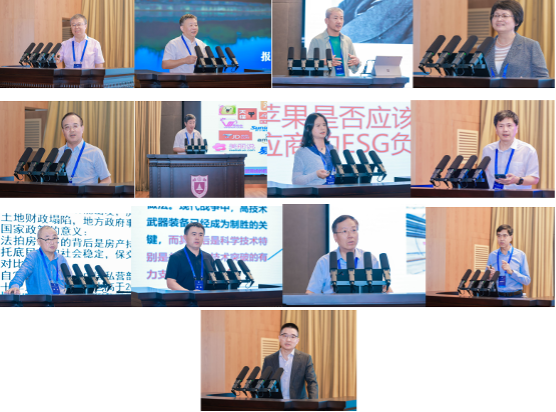
(Photo: Speakers of the plenary reports)
## IV. Expanded Meeting of Alliance Member Units
At noon on August 17, 2024, the Expanded Meeting of Alliance Member Units was held at the International Conference Center of Nanjing University. Representatives from more than 20 universities attended the meeting, which was hosted by Professor Sheng Zhaohan from Nanjing University. The meeting elaborated on the background and purpose of the alliance's establishment, as well as the responsibilities of alliance members and the key work for the future.
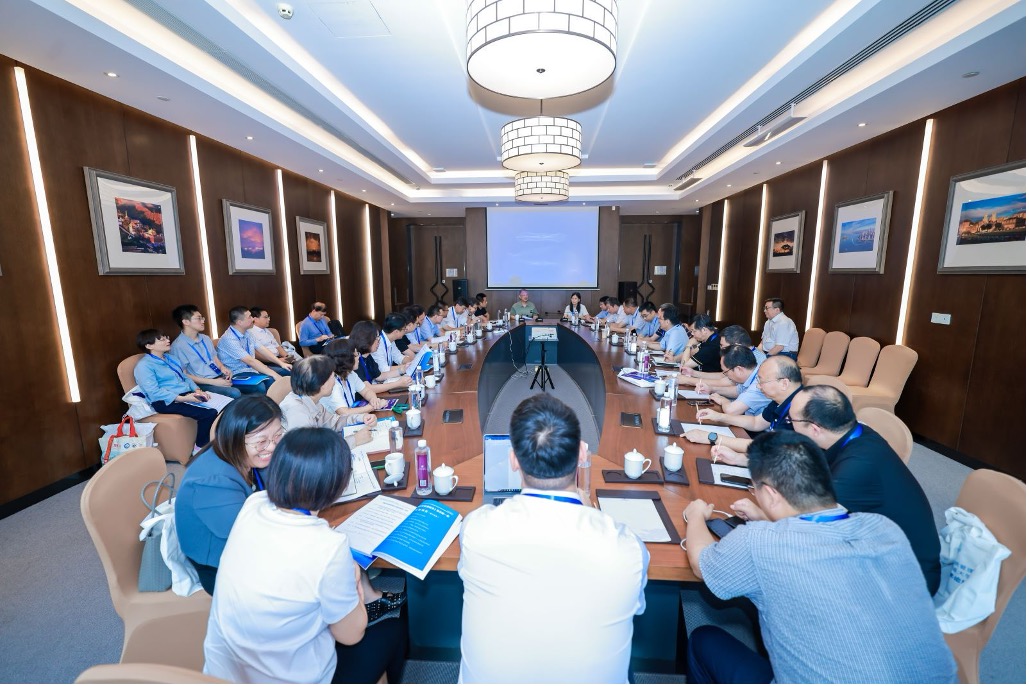
(Photo: Scene of the Expanded Meeting of Alliance Member Units)
## V. Parallel Session Reports
On the afternoon of August 17, 2024, Parallel Session 1 (Technology and Exploration), Parallel Session 2 (Fields and Applications), Parallel Session 3 (Algorithms and Optimization), Parallel Session 4 (Engineering and Decision-Making), Parallel Session 5 (Doctoral Student Forum 1), and Parallel Session 6 (Doctoral Student Forum 2) were held at the International Conference Center of Nanjing University. More than 40 scholar representatives and over 20 doctoral student representatives delivered academic reports.
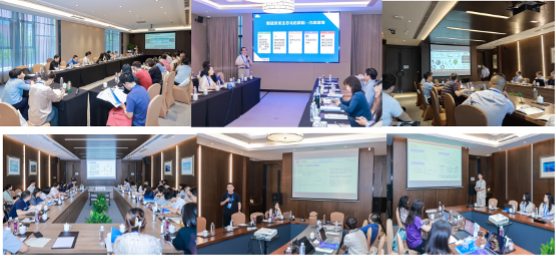
(Photo: Scene of the parallel sessions)
## VI. Conference Awards and Summary
The alliance presented certificates of appreciation to each plenary speaker and certificates to 4 doctoral students who won the Excellent Doctoral Student Academic Report Award. At the end of the event, Professor Sheng Zhaohan from Nanjing University summarized the plenary reports and academic reports of the six parallel sessions, and put forward expectations and requirements for the future development of the alliance.
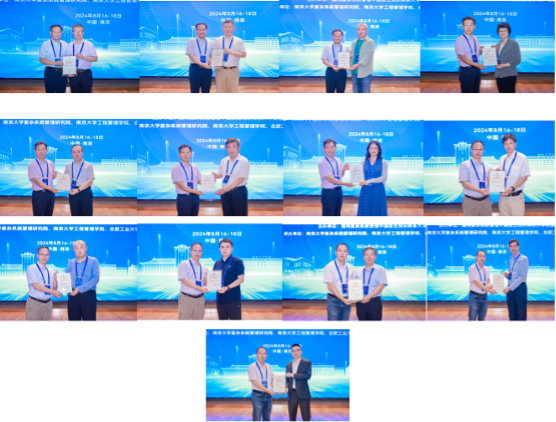
(Photo: Presentation of certificates of appreciation)
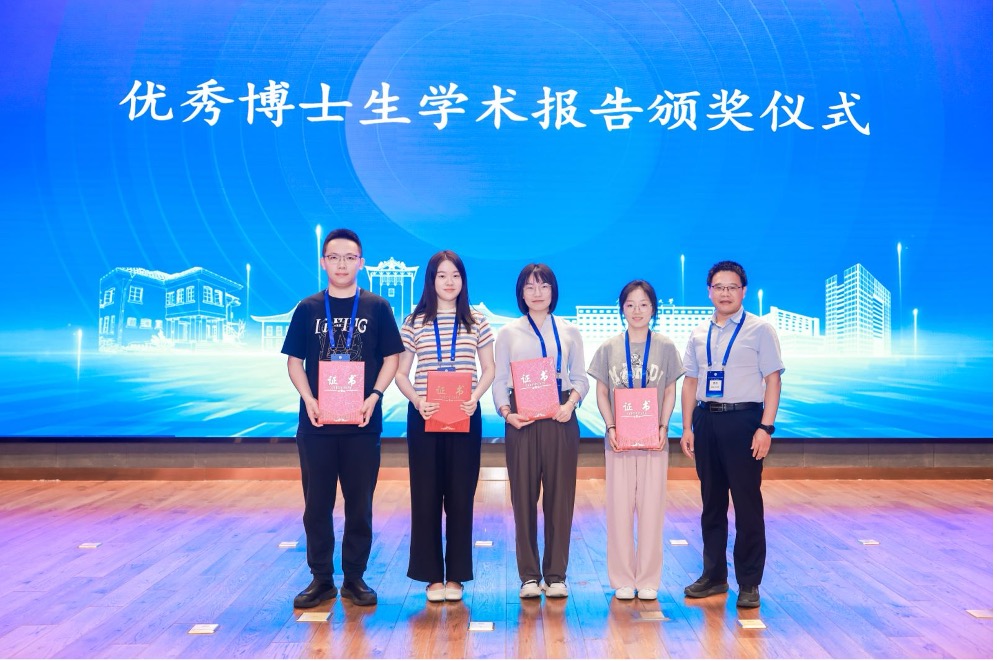
(Photo: Award ceremony of the Excellent Doctoral Student Academic Report Award)
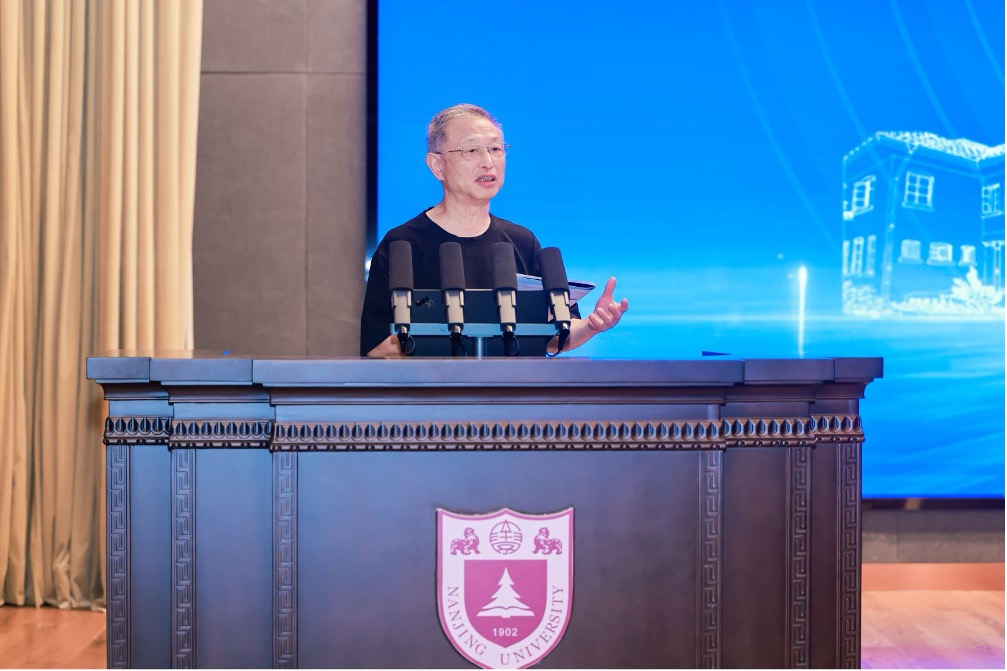
(Photo: Professor Sheng Zhaohan making a summary speech)
